Free guide
Should you run outbound on signals only, or on your whole ICP?
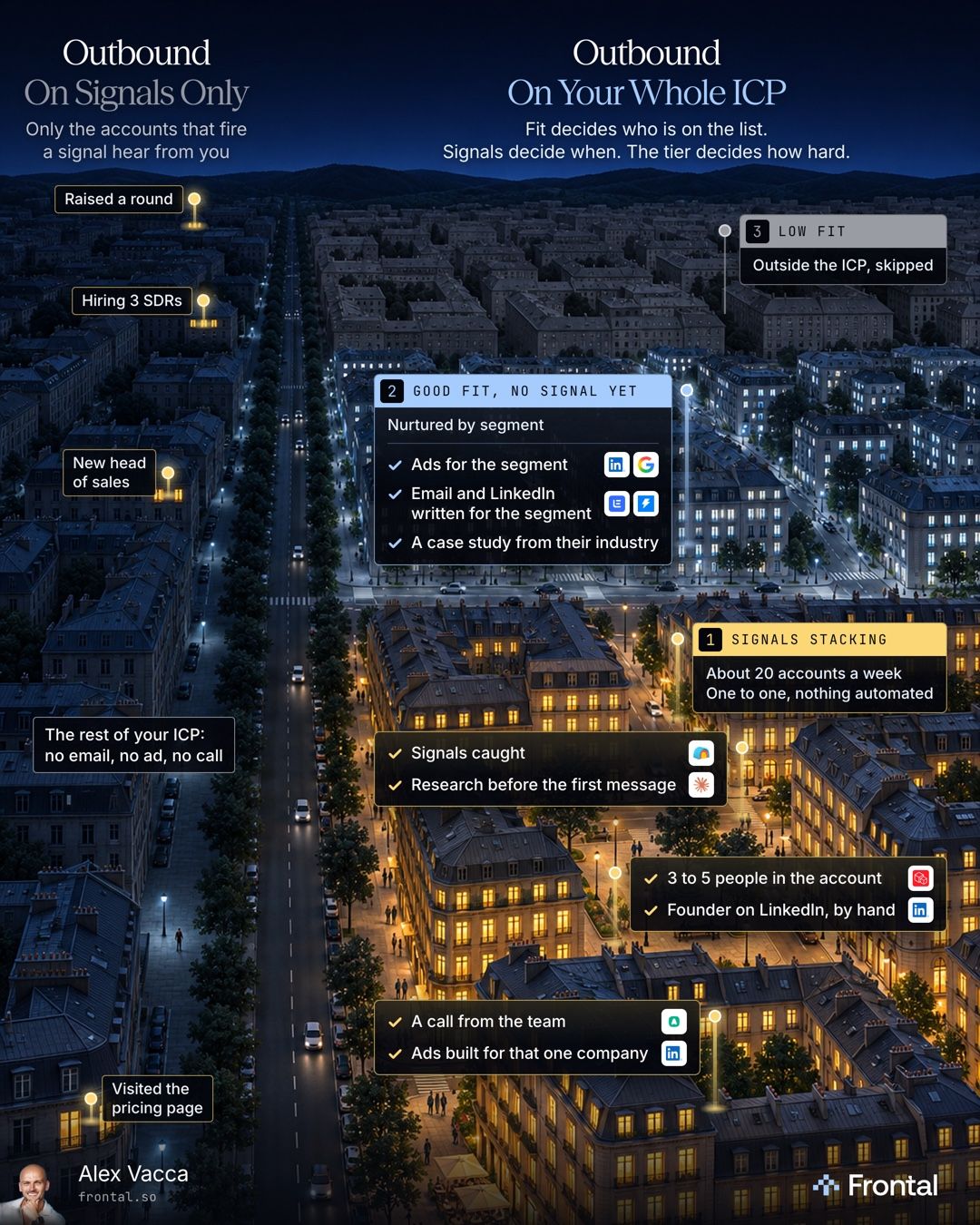
No. Keep your whole ICP on the list. Fit decides who is on it, signals decide when an account gets the one to one push, and the tier decides the effort.

Alex Vacca, Founder, Frontal
Published
What’s inside
- The fit and timing scorecard we fill in before any account gets a tier
- How we pick the week’s tier 1 accounts, and the Claude prompt that researches each one
- What we build for each account on the weekly shortlist before we ask for anything, and an email that leaves the signal out
- The segment nurture for good fits with no signal yet, and when an account moves up
- How we decide which accounts are a low fit and get skipped
Run outbound on your whole ICP, every account that fits your ideal customer profile. Fit decides who is on that list, and signals decide when an account on it gets the one to one work.
We only use signals to rank accounts that are already on the list. Otherwise you end up emailing every company that raised money, whether it’s a fit or not.
On the list, we wait for signals to stack. Every deal we’ve closed from our outbound had at least three signals stacked on top of each other.
That’s the process we run for clients at Frontal.
Score every account first
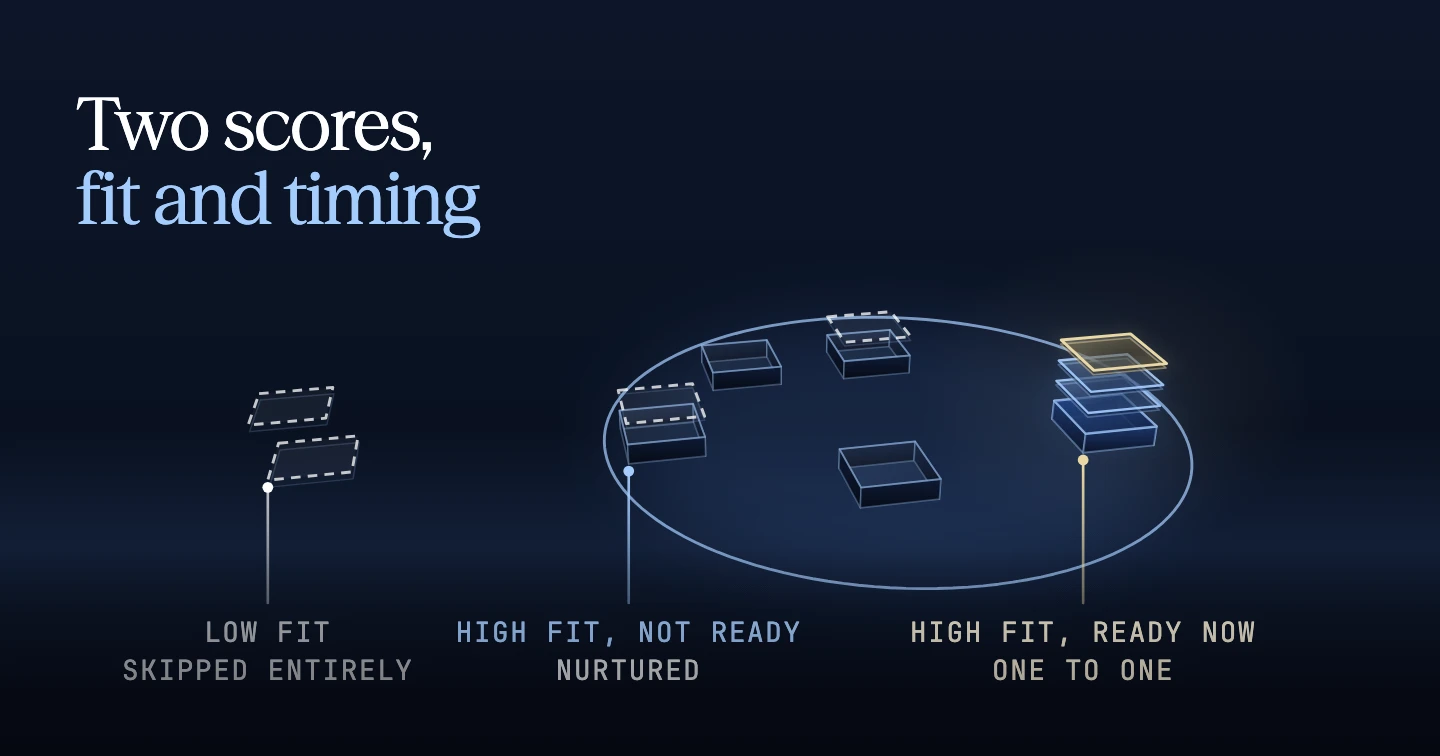
Every account gets two scores, fit and timing. Our head of ABM (account-based marketing) has a rule for it: if an account is high fit and ready to buy now, it gets one to one. If it’s high fit but not ready to buy now, it gets nurtured, and low fits get skipped entirely.
Fit starts from who actually paid you. We ask for CRM access and the last 40 or 50 closed won deals. We also ask for 10 dream accounts, and use them to find 100 or 200 look-alikes. Then we look for the one thing that, if it’s missing, means the company will never buy. For a cash management software client it was the number of legal entities. For another client it was monthly ad spend above 500k, and for a higher education product it was student enrollment. Don’t skip this and go straight to filters in a database. Two companies with the same size, same industry and same country can be completely different buyers.
Timing comes from signals, and signals come in three kinds. The strongest are the ones only you can see: someone from a target account visiting your pricing page, engaging with your ads, commenting on your founder’s post or replying to an email, or a deal you lost six months ago coming back to your website. Then people signals: a past champion changing jobs, or a new leader at a target account, like a new CRO or a new head of marketing. Then market signals: hiring for roles tied to your problem, raising money, adding or dropping a tool, or expanding into a new market.
Before we score the full list, we score about 50 companies by hand and check the sample. Nothing runs until that sample looks right. Here is the scorecard, as a template you can copy into a sheet or a Clay table:
Keep reading, free
Pop your email in and we’ll send a 6-digit code. The rest of the guide opens right here.
More free guides
Free guide
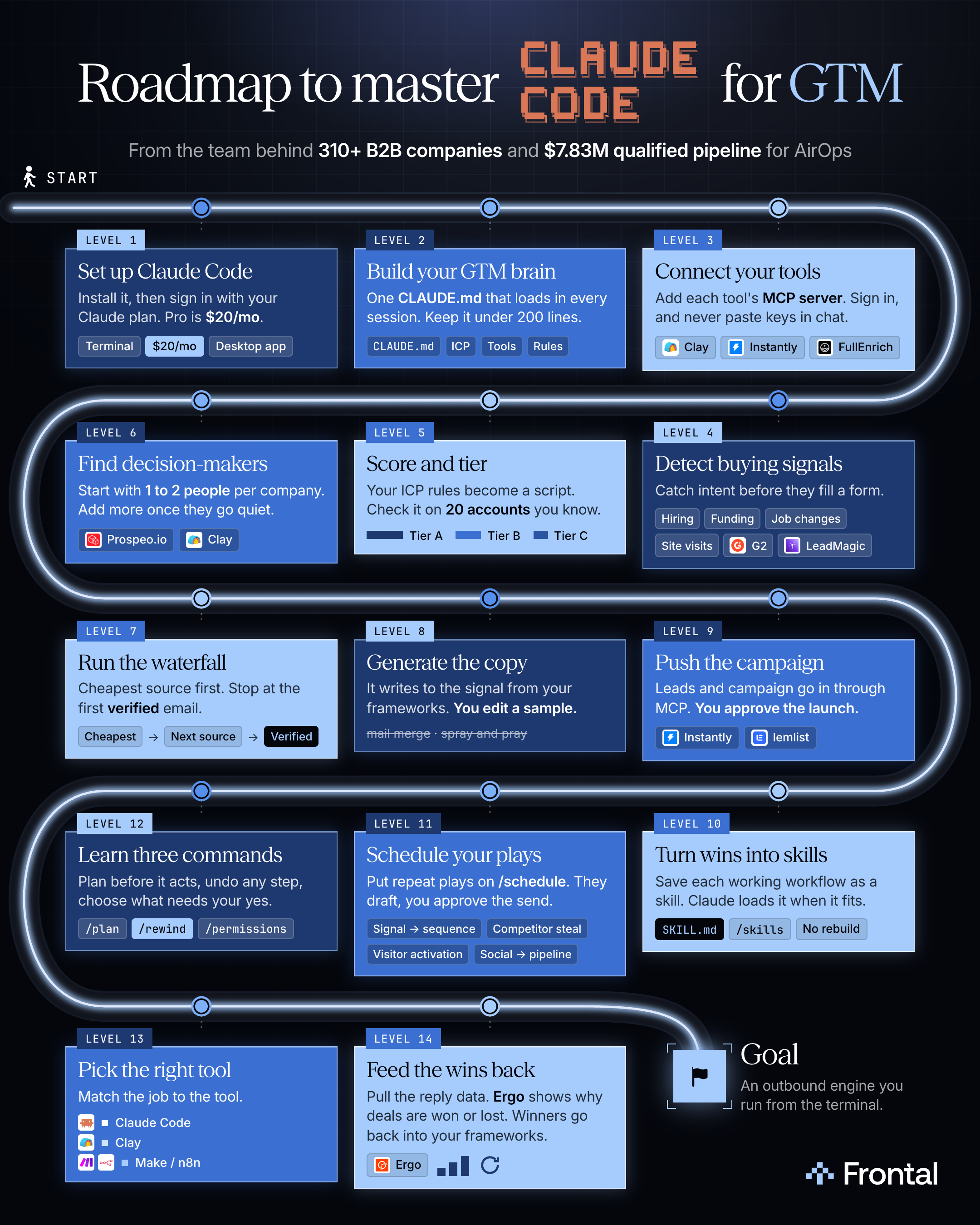
How do you run cold outbound from Claude Code, from signal to live campaign?
Install Claude Code, write one CLAUDE.md, connect each tool by MCP, and run signal to sent with two checks: you edit a sample and approve the launch.
Free guide
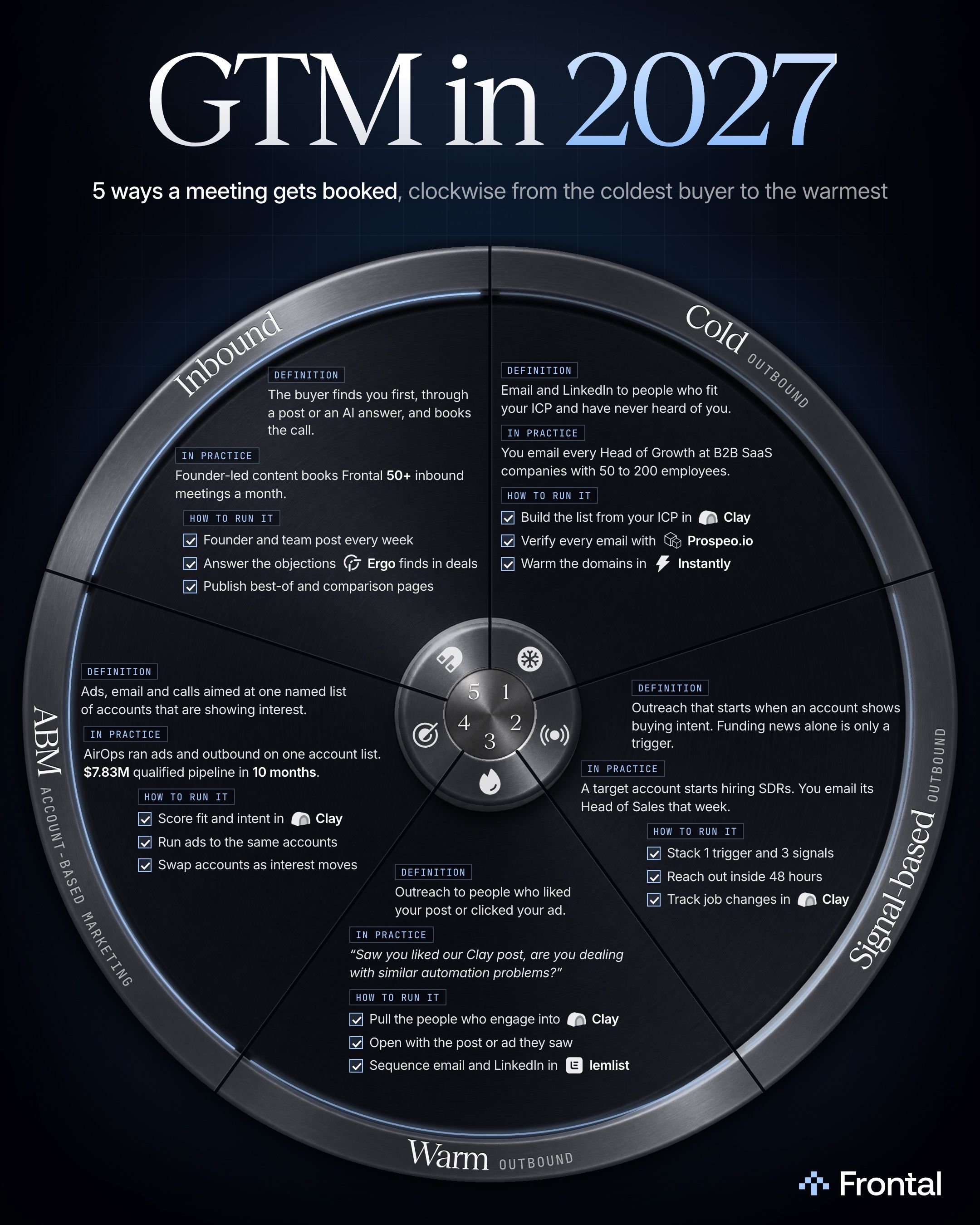
What are the 5 ways to book B2B meetings in 2027?
Cold, signal-based and warm outbound, ABM and inbound differ in what the buyer, or their company, has done before you write. I’d run all 5 on 1 account list.
Free guide
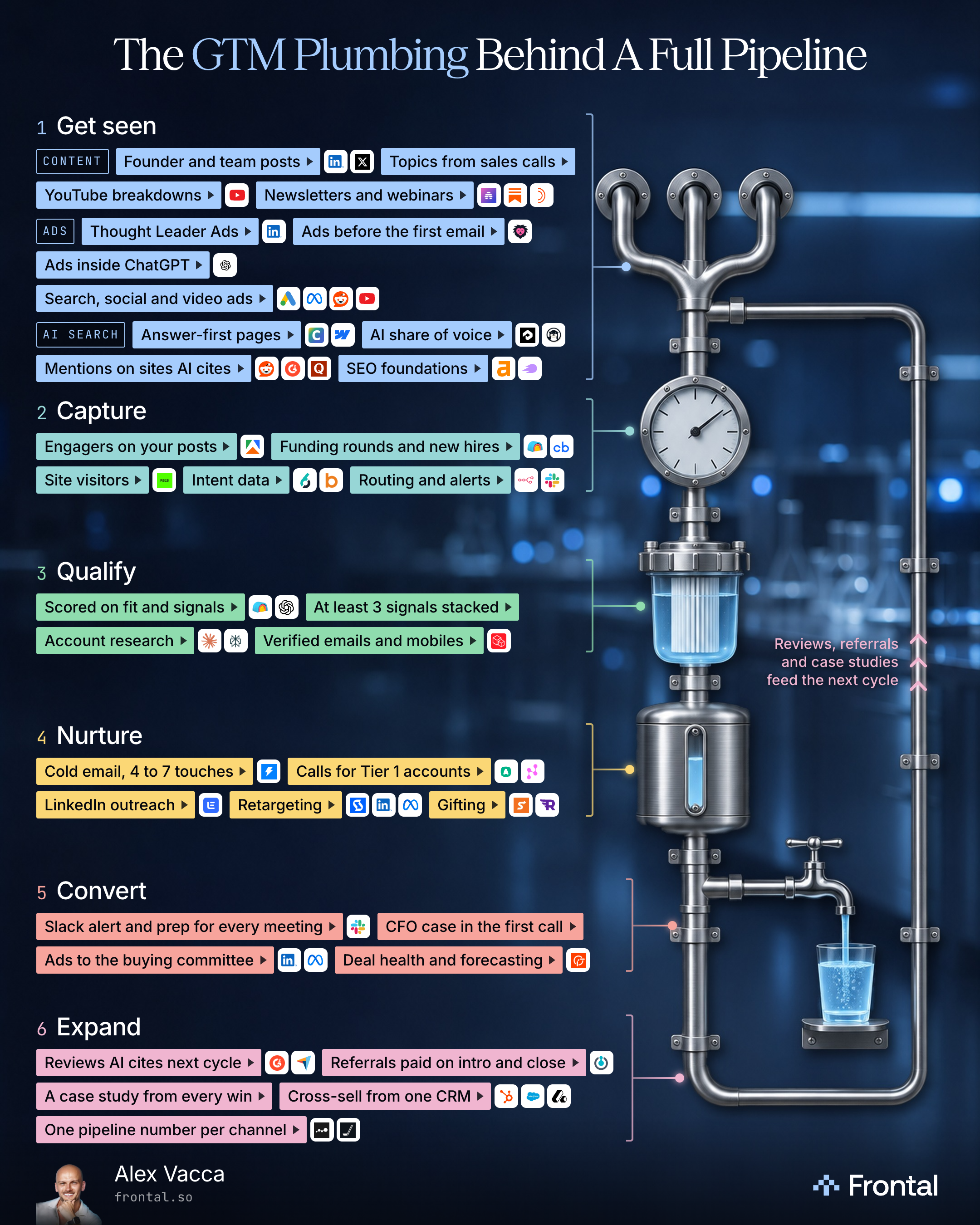
What does a B2B pipeline need besides cold email?
Every channel on the same accounts: get seen, capture, qualify, nurture, convert and expand, with the tools for each level.
Free guide
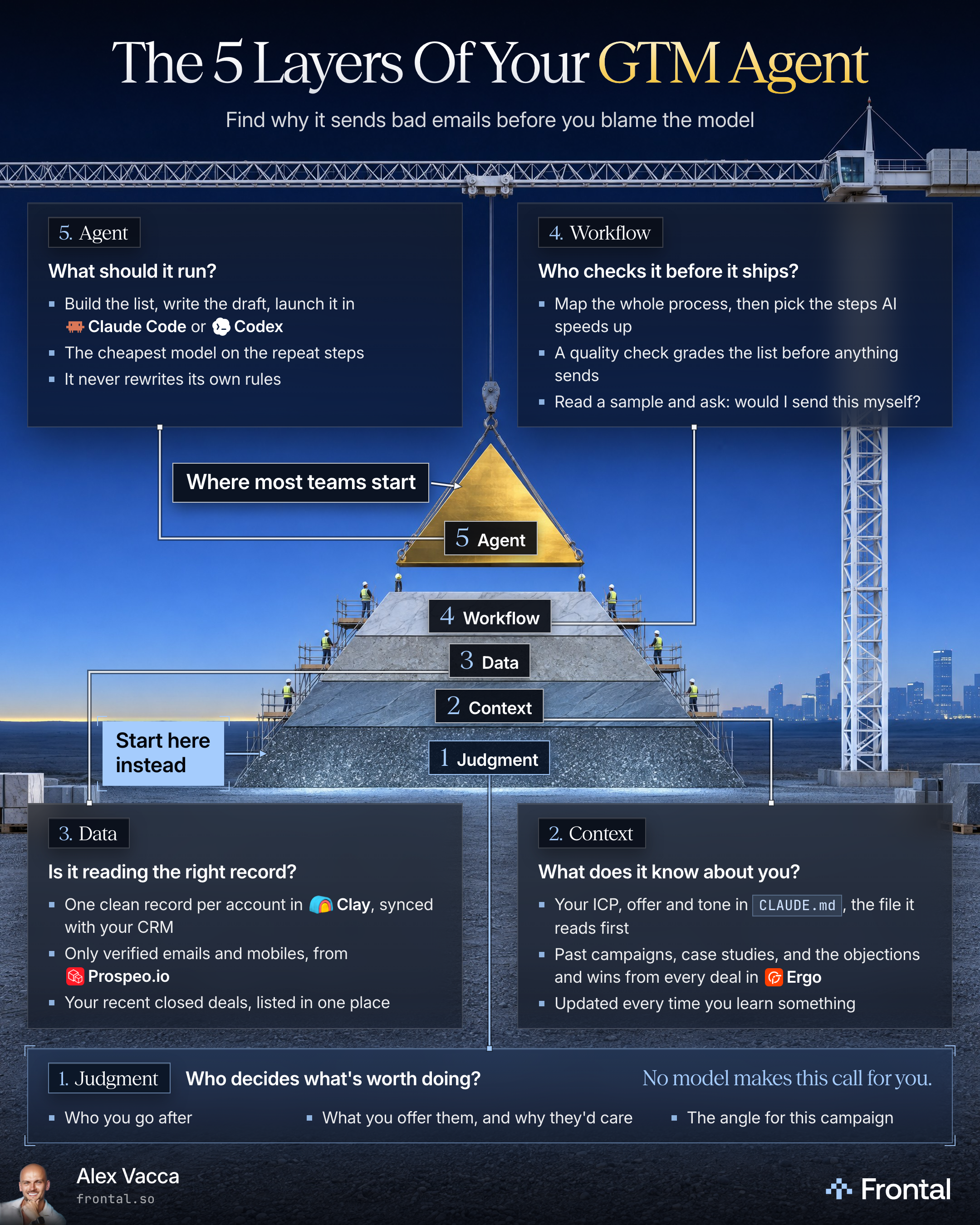
Why is nobody replying to my AI agent’s emails?
Look under the agent first: who decides, what it knows, the records it reads and who checks it. Build the agent last, on top.