Key Takeaways
- Frontal AI is best for post-PMF B2B tech teams that want omnichannel marketing connected to GTM execution, with embedded senior operators coordinating paid media, account-based marketing, outbound, and content around shared account priorities.
- Directive is best for B2B companies that want performance-led omnichannel marketing, with paid media, programmatic advertising, content, creative, and revenue reporting working together.
- Ironpaper is best for B2B companies with complex buying journeys that need content-led omnichannel demand generation, including buyer education, lead nurturing, and sales enablement.
- SmartBug Media is best for HubSpot teams that want omnichannel lifecycle marketing, connecting inbound campaigns, paid media, marketing automation, and customer engagement.
- Walker Sands is best for B2B brands that want integrated PR, content, and paid media campaigns, combining earned, owned, and paid channels to build visibility and demand.
Running campaigns across five channels doesn’t automatically create an omnichannel experience. Your ads, content, emails, and sales outreach can all reach the same potential buyer without sharing a consistent message or context.
The best omnichannel marketing agencies coordinate those interactions around the buyer journey, with each channel supporting the next.
This guide compares five agencies by channel expertise, audience alignment, execution model, pricing, and the marketing problems they solve best.
How we built this list: every provider here earns its place based on its integrated marketing capabilities, B2B experience, delivery model, pricing transparency, and published customer evidence. Frontal AI is included in this comparison and held to the same criteria as every other provider.
Top 5 Omnichannel Marketing Agencies for B2B SaaS in 2026
| Agency | Best For | Standout Strength | Starting Price |
|---|---|---|---|
| Frontal AI | Post-PMF B2B tech teams needing omnichannel GTM execution | Embedded operators coordinating paid media, ABM, outbound, content, and RevOps around shared account priorities | Custom, scoped on a call |
| Directive | Performance-led B2B omnichannel marketing | Paid search, paid social, programmatic, content, and creative connected to pipeline and revenue measurement | Custom quote |
| Ironpaper | Content-led omnichannel demand generation for complex B2B sales | Integrated content, ABM, lead nurturing, and sales enablement across the buyer journey | Custom quote |
| SmartBug Media | HubSpot-centered omnichannel lifecycle marketing | Inbound, paid media, email, automation, and CRM-connected customer engagement | Custom quote |
| Walker Sands | Integrated B2B PR, brand, and demand campaigns | Paid, earned, and owned media coordinated around brand visibility and demand generation | Custom quote |
1. Frontal AI: Best for Omnichannel GTM Execution Around Shared Account Priorities
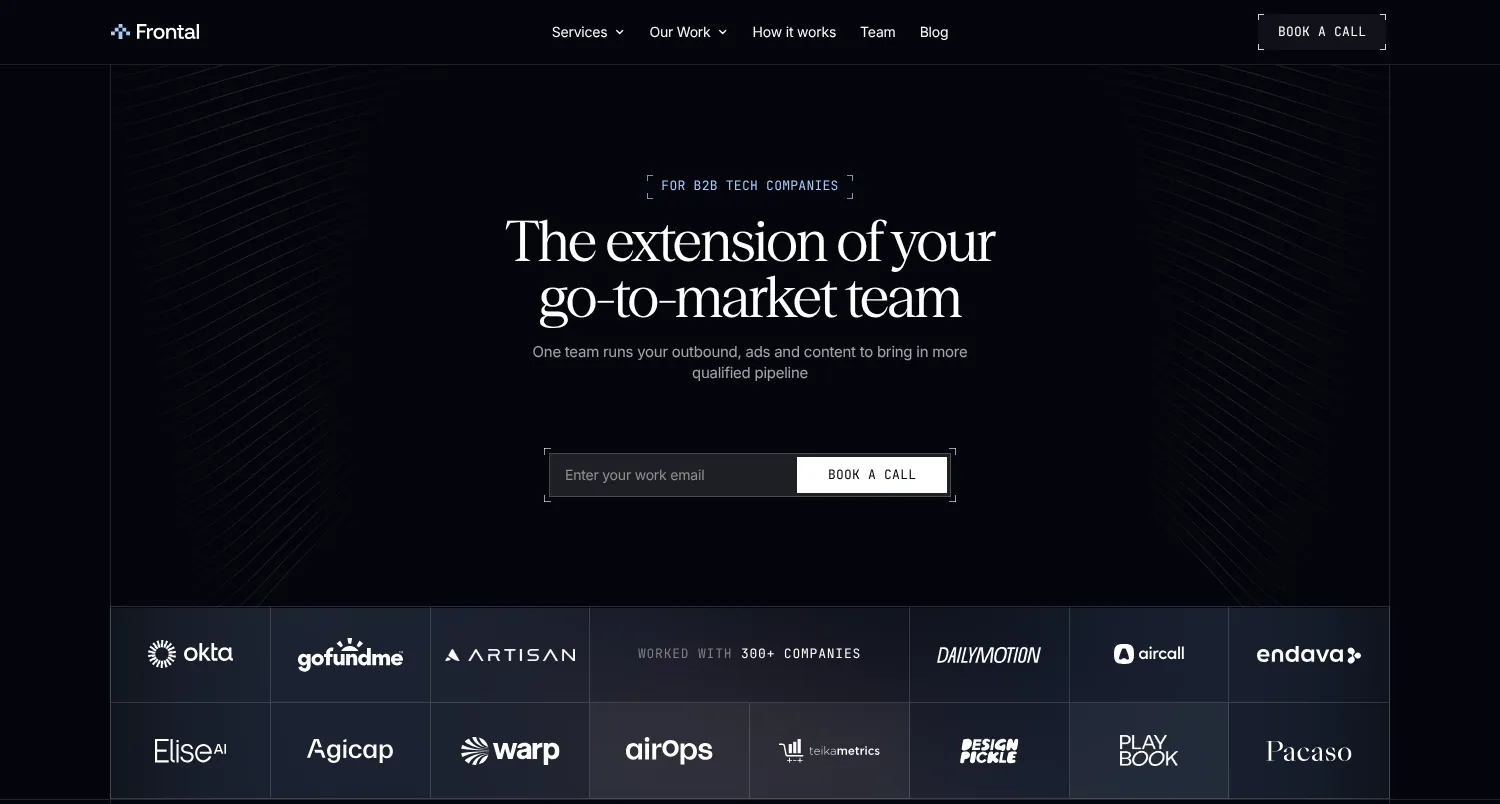
Frontal AI is a go-to-market partner for B2B tech companies past product-market fit with an established sales team. We’re an embedded extension of your go-to-market team, with senior operators taking ownership of execution across the agreed scope of GTM Services, Account-Based Marketing, Paid Media, Content Engineering, and RevOps.
Clients can start with one service. When several are in scope, we coordinate paid campaigns, content, outbound, and sales follow-up around shared account priorities, so buyers receive relevant messages across channels. We’ve worked with 300+ B2B companies to date.
Frontal AI Key Services
1. GTM Services and Signal-Based Outbound
Our GTM Services work begins with closed-won analysis, ICP definition, TAM mapping, and account scoring to identify the companies and buyers worth pursuing.
We track signals such as leadership changes, relevant hiring activity, website engagement, and changes in a company’s technology stack. These help determine when to reach out and what context could make the conversation relevant. They don’t prove that someone will buy.
Our operators build and run account-specific outbound workflows, with the sales team’s feedback on replies informing subsequent targeting and messaging.
2. Paid Media and Account-Based Marketing
Our Paid Media team builds and runs LinkedIn, Meta, and Google campaigns, handling audiences, creative, conversion tracking, and optimization. LinkedIn is our largest paid channel.
Account-Based Marketing brings advertising and outbound together around a shared list of target companies. We prioritize accounts with your team, identify the people involved in purchasing decisions, and coordinate campaign messages across the relevant channels.
For example, an account-based program might combine:
- LinkedIn thought-leadership ads introducing an industry problem
- Retargeting for buyers who’ve engaged with relevant material
- Google campaigns capturing active search demand
- Outbound follow-up informed by account engagement
The goal is to reach the same target accounts with messages suited to where buyers are in their evaluation.
3. Content Engineering That Supports the Sales Process
We develop content from your team’s existing knowledge, including customer conversations, recurring objections, product expertise, and founder perspectives.
Depending on the audience and buying stage, the work can include:
- Founder and employee content for LinkedIn and X
- Customer stories, use cases, and educational articles
- Comparison and FAQ pages for search and AI discovery
- Content that salespeople can share with prospects
- Material for paid and account-based campaigns
Our operators handle the agreed writing, design, approvals, and publishing. The content gives buyers useful information while supporting the sales team’s conversations.
For a closer comparison of agencies specializing in this approach, see our guide to the best account-based marketing agencies.
4. RevOps Connecting Campaign Activity to Sales
Our RevOps work establishes the data foundation supporting coordinated marketing. We clean and enrich CRM records, build lead-routing workflows, maintain attribution definitions, and connect campaign activity to opportunities.
We work inside your CRM and the tools agreed for the engagement. HubSpot and Salesforce are the CRMs we support, while Clay can serve as an enrichment layer.
For an omnichannel program, this means keeping account information consistent, routing qualified inquiries to the appropriate sales owner, and giving the team one view of engagement and pipeline across the agreed channels.
As campaigns develop, we review reporting and sales feedback to improve the underlying workflows.
Our guide to the best RevOps agencies covers the broader consulting and operational partners available.
Frontal AI Pricing
Our pricing is scoped on a call based on the services involved, campaign requirements, existing tools, and the execution we’re taking ownership of. We build it, run it and keep improving it. If you want to take it in-house later, we can hand it over. Book a call to learn exactly what we can take on for you.
Where Frontal AI Shines
- Senior operators embedded in your team: The people responsible for the work operate alongside your GTM team, combining technical execution with an understanding of the accounts and commercial priorities you’re pursuing.
- One account plan across the agreed services: When GTM engineering, paid media, and content engineering are in scope together, they work from shared account priorities and signals, with RevOps supporting the data and reporting underneath them.
- You keep what we build: We work inside your CRM and the tools agreed for the engagement. The workflows and operating setup are documented, so the work can move in-house when you’re ready.
Where Frontal AI Falls Short
- Not a generalist consumer marketing agency: Frontal AI focuses on post-PMF B2B tech companies with an established sales process. B2C brands looking for retail or consumer omnichannel campaigns should consider a different provider.
- Not designed for pre-PMF market validation: If you’re still trying to determine whether the product sells or who the customer is, building a more sophisticated omnichannel program is premature.
Frontal AI Client Results
For AirOps, Frontal AI coordinated LinkedIn advertising, thought-leadership content, and outbound around shared target accounts, with engagement and pipeline tracked in HubSpot. The 10-month combined-channel program generated $7.83 million in qualified pipeline and $1.52 million in closed-won revenue, without adding SDRs.
For Aircall, regional teams had inconsistent target lists and incomplete CRM data. Frontal AI created and enriched 3,655 accounts in a self-refreshing market database over six months, giving teams a consistent foundation for account selection and sales targeting.
For Teikametrics, Frontal AI built automated prospecting workflows around the existing sales team. The outbound program generated $300K+ in pipeline over nine months while saving 100+ hours of manual prospecting per month.
Read more Frontal AI case studies →
Who Frontal AI Is Best For
- Post-PMF B2B tech companies with active sales and marketing channels: You have an established sales team and need more execution capacity to coordinate the work around relevant accounts.
- Newly appointed revenue or growth leaders: You’re responsible for improving performance but lack the internal capacity to build and manage every GTM workstream.
- Teams struggling with disconnected campaign data and account priorities: Your channels generate activity, but sales and marketing need a more consistent way to prioritize accounts, follow up, and evaluate opportunities.
Want your marketing channels and sales team working from the same priorities? Tell us which channels you’re currently running, where coordination is breaking down, and what you need to move. Book a call.
2. Directive: Best for Performance-Led Omnichannel Marketing
Directive is a B2B performance marketing agency connecting paid search, paid social, programmatic advertising, content, creative, and RevOps.
Key Services
- Paid search and paid social: Campaigns across Google, Microsoft, LinkedIn, Meta, and other channels, with audience targeting and budget allocation informed by commercial performance.
- Programmatic and retargeting: Display, video, connected TV, and retargeting campaigns designed to reach buying groups across multiple interactions.
- Content and performance creative: SEO, content marketing, ad creative, and landing-page optimization supporting organic discovery and paid conversion.
- Revenue Operations and attribution: CRM integrations, lifecycle scoring, routing, conversion tracking, and reporting connecting marketing performance with qualified pipeline.
Pricing
Directive doesn’t publish standard pricing for integrated omnichannel marketing. Engagements are custom-quoted based on the selected services and campaign scope.
Where Directive Shines
- Broad performance marketing expertise: Directive brings paid search, social, programmatic, creative, and analytics together, making it well suited to B2B companies managing several substantial acquisition channels.
- Channel investment tied to business outcomes: Its methodology incorporates audience intelligence, market opportunity, financial modeling, and pipeline reporting to guide where marketing budgets go.
Where Directive Falls Short
- Performance marketing is the primary focus: Directive’s integrated offering centers on paid media, programmatic advertising, performance creative, content, and RevOps. Teams whose main priority is account-specific prospecting, GTM, and outbound execution alongside their sales reps should clarify how much of that work is included in the engagement.
- Account-team changes have affected continuity for some clients: Verified reviewers on Clutch and G2 mention changes in assigned team members during engagements. Buyers should clarify how account transitions are managed and how campaign knowledge and strategic priorities are preserved.
Customer Reviews
“They quickly became an extension of the product marketing team rather than just external consultants.” - Jack McInnes
“We have had a lot of change with regard to our account team in the past six months.” - Emily January
Who Directive Is Best For
- B2B SaaS and technology companies with substantial acquisition programs: A strong choice when paid search, social, programmatic advertising, creative, and content need to be coordinated around measurable pipeline and revenue outcomes.
3. Ironpaper: Best for Content-Led Omnichannel Demand Generation
Ironpaper is a B2B marketing agency specializing in content-led demand generation, account-based marketing, lead nurturing, and sales enablement for companies with complex buying journeys.
Key Services
- B2B content and demand generation: Buyer research, messaging, thought leadership, SEO, and content campaigns designed to attract and educate relevant audiences.
- Account-based and paid marketing: Targeted campaigns combining ABM, paid advertising, retargeting, and channel-specific messaging to engage decision-makers.
- Lead nurturing and marketing automation: Email programs, CRM segmentation, lead scoring, and automated nurturing workflows that support buyers as they move toward sales.
- Sales enablement and conversion optimization: Sales content, website improvements, landing pages, qualification processes, and marketing-to-sales handoffs that help turn engagement into opportunities.
Pricing
Ironpaper provides custom pricing for integrated marketing engagements, including project-based work, consulting, and ongoing retainers.
Where Ironpaper Shines
- Content connects to conversion and sales enablement: Its services extend from research and content creation through lead nurturing, marketing automation, and sales follow-up, helping buyers progress beyond the first conversion.
- Flexible engagement structures: Ironpaper offers consulting, project work, and ongoing retainers, giving companies different ways to address a specific challenge or build a longer-term marketing program.
Where Ironpaper Falls Short
- Inbound and nurturing take priority: Ironpaper’s integrated approach emphasizes ABM, inbound marketing, strategic content, lead nurturing, and sales enablement. It’s less directly aligned with teams whose primary need is building and running signal-triggered outbound workflows alongside an existing sales team.
- Some clients report initial alignment challenges: Both of its verified G2 reviewers mention early engagement friction. One says it took time to get in sync with Ironpaper’s working style, while another reports that the first assigned consultant didn’t understand their needs.
Customer Reviews
“The Ironpaper team really took the time to get to know our company and our tiny Marketing team of 2. They not only provided great strategic recommendations, but also helped take on some of the tasks we just didn’t have the time to do.” - Ashley H.
“It may take a while to get in sync with them” - Lucas O.
Who Ironpaper Is Best For
- B2B companies with long sales cycles and buyers who need education before purchasing: Ironpaper is a good fit when content, paid distribution, lead nurturing, and sales enablement need to work together across a complex customer journey.
4. SmartBug Media: Best for HubSpot-Centered Omnichannel Lifecycle Marketing
SmartBug Media is a HubSpot Elite Solutions Partner offering integrated inbound marketing, paid media, lifecycle automation, RevOps, and customer engagement services.
Key Services
- Inbound marketing and demand generation: Content strategy, SEO, landing pages, lead generation campaigns, and conversion optimization designed to attract and convert relevant audiences.
- Paid media and campaign management: Paid search, paid social, audience targeting, campaign creative, and optimization across channels that support customer acquisition.
- HubSpot marketing automation and RevOps: Lifecycle segmentation, lead scoring, automated email sequences, CRM integrations, attribution, and reporting that connect marketing activity with sales processes.
- Customer success and retention marketing: Customer communications, service automation, knowledge bases, and lifecycle workflows that extend coordinated engagement beyond the initial sale.
Pricing
SmartBug Media provides custom quotes for integrated omnichannel marketing programs. Its separately priced HubSpot onboarding packages cover technical implementation, not ongoing omnichannel marketing.
Where SmartBug Media Shines
- Deep HubSpot expertise: SmartBug Media holds Elite Solutions Partner status and offers implementation, training, and ongoing management across HubSpot’s marketing, sales, service, and content tools.
- Customer engagement beyond acquisition: Its broader lifecycle capabilities include retention, customer success, and ecommerce, making it useful for organizations that want marketing coordination to continue after a deal closes.
- Flexible industry and business-model coverage: SmartBug serves SaaS alongside healthcare, manufacturing, education, senior living, and other industries, with capabilities spanning B2B demand generation and consumer-facing marketing.
Where SmartBug Media Falls Short
- HubSpot is central to its delivery model: SmartBug works with other marketing technologies, but its integrated lifecycle offering has a strong HubSpot emphasis. Teams committed to a different CRM should confirm how campaign automation, customer data, and reporting will work within their existing stack.
- Reviewers report scheduling and account-team changes: Verified G2 reviewers mention challenges coordinating sessions with busy specialists and changes in assigned account teams. Buyers should establish who will own their account, how availability is managed, and what happens when team members change.
Customer Reviews
“The team becomes a true extension of our internal team.” - Madison E.
“I’ve been with Smartbug for many years now and have had a decent amount of change on my account.” - Jenn S.
Who SmartBug Media Is Best For
- HubSpot-centered organizations that want consistent engagement across the customer lifecycle: A strong choice when inbound marketing, paid acquisition, email nurturing, CRM automation, and customer success need to work together instead of operating as separate functions.
5. Walker Sands: Best for Integrated B2B Brand, PR, and Demand Campaigns
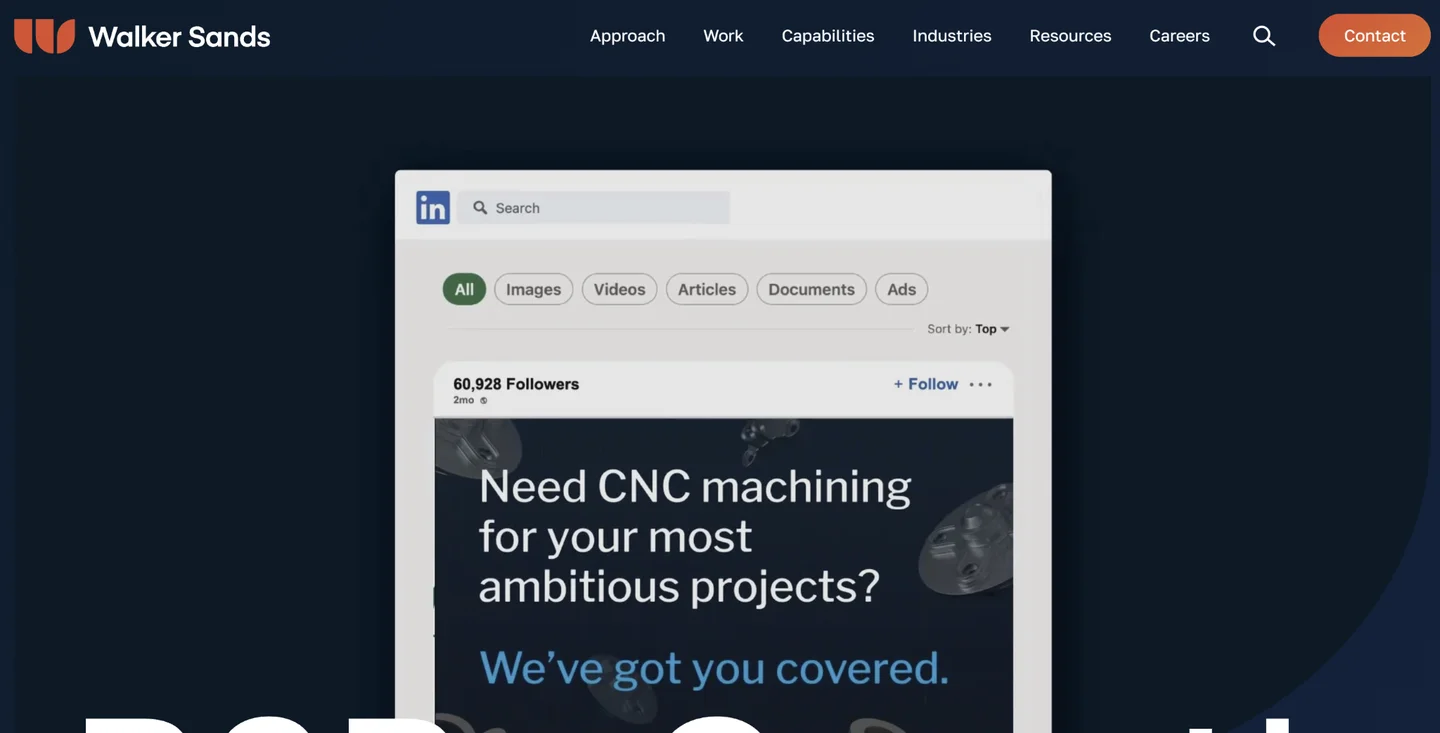
Walker Sands is an integrated B2B marketing agency combining PR, brand strategy, content, creative, and paid media across earned, owned, and paid channels.
Key Services
- Public relations and strategic communications: Media relations, executive visibility, influencer outreach, thought leadership, and brand communications that build credibility across relevant audiences.
- Integrated content and creative campaigns: Original research, messaging, editorial content, campaign creative, video, and sales enablement materials distributed across paid, earned, and owned channels.
- Digital marketing and demand generation: Paid digital media, SEO, generative engine optimization, email marketing, and marketing automation programs supporting visibility and lead generation.
- RevOps and GTM engineering: CRM architecture, integrations, workflow design, reporting, and Clay-powered GTM orchestration. Walker Sands expanded these capabilities through its acquisition of RevPartners in June 2026.
Pricing
Walker Sands provides custom quotes for integrated omnichannel marketing programs, with fees based on the agreed strategy, PR, content, creative, digital marketing, and RevOps services.
Where Walker Sands Shines
- Strong earned-media capabilities: Walker Sands brings established PR and media-relations expertise into integrated marketing, helping B2B companies build credibility through coverage, research, and executive thought leadership.
- Brand and demand under one strategy: Its approach can connect positioning and reputation-building with campaigns intended to generate engagement and qualified demand.
Where Walker Sands Falls Short
- Its integrated offering has a strong brand and communications emphasis: PR, earned media, creative, and reputation management are established strengths. Teams whose immediate priority is account-specific outbound execution should assess the proposed GTM engineering scope carefully as opposed to assuming every integrated campaign includes that work.
- Some reviews mention a learning curve: Verified G2 reviewers have described an initial period spent getting the agency familiar with their messaging or building momentum. Buyers with complex products should ask how discovery and industry onboarding will work.
- Creative quality has drawn mixed feedback: A verified Clutch reviewer described Walker Sands’ design work as adequate but wanted stronger design expertise. Teams commissioning creative-heavy campaigns should review relevant portfolio samples and clarify the design and revision process before signing.
Customer Reviews
“Walker Sands has helped us define and continue build a new category in our space. They continue to provide us with PR strategy and content.” - Paul W.
“On the design side, they can invest more in designers. Overall, their design is fine, it’s adequate. If I were to say one thing that they could improve on, it would be the quality of the designers they have on staff.” - Verified Clutch reviewer
Who Walker Sands Is Best For
- B2B technology and enterprise brands that want reputation-building connected to demand generation: Walker Sands is a decent option when the marketing program needs coordinated PR, executive thought leadership, content, paid media, and creative campaigns alongside broader revenue objectives.
How to Choose an Omnichannel Marketing Agency
Start by identifying where the buyer experience breaks down and which capabilities your team needs help coordinating.
1. Check Whether the Channels Share a Customer Journey
An agency can manage paid search, LinkedIn, email, and content without delivering a genuinely omnichannel experience.
The difference is whether the channels recognize and support the same buyer journey.
For example, a prospect might discover your company through LinkedIn, visit a comparison page, attend a webinar, and then reply to an outbound message. These interactions should contribute to a consistent understanding of the account rather than generate four disconnected campaign records.
Before hiring an agency, ask:
- How do you identify the same buyer or account across channels?
- What changes in messaging as someone moves through the buying journey?
- How do marketing and sales coordinate follow-up?
- Which system stores the shared customer context?
- How do campaign results influence future targeting?
Frontal AI fits the bill when the main challenge is coordinating account priorities across the GTM team. Our operators build and run the agreed work using your CRM and the tools selected for the engagement.
2. Match the Agency’s Core Strength to Your Marketing Problem
Omnichannel agencies don’t all approach integration from the same starting point.
If paid acquisition is your largest investment, an agency with proven performance marketing expertise may be the best choice. If buyers spend months researching complex products, content, education, and nurturing deserve more attention.
Other situations call for different strengths. A company expanding into enterprise markets may need PR and thought leadership to build credibility with unfamiliar buyers. A business already using HubSpot across marketing, sales, and customer success may prioritize lifecycle automation and customer data.
The questions to ask are:
- Which channel or stage is currently underperforming?
- Does the agency have relevant experience with your buying process?
- Which services will it execute directly?
- What will still be owned by your internal team?
- Can it show an integrated client engagement similar to yours?
3. Understand How Data, Measurement, and Ownership Work
Omnichannel marketing becomes difficult to evaluate when each channel reports success differently.
Paid media may report conversions, content may report engagement, and email may report replies. None of these automatically explains how the overall program contributes to qualified opportunities or revenue.
Ask agencies to demonstrate how they connect campaign data to the CRM and how they evaluate the effect of multiple interactions. Clarify who owns:
- CRM data quality and account matching
- Campaign tracking and attribution definitions
- Lead qualification and routing
- Reporting across channels
- Ongoing workflow maintenance
- Changes to targeting when sales feedback reveals a problem
Attribution also needs realistic expectations. A buyer may engage with several channels before purchasing, and no single report can perfectly isolate the contribution of each interaction.
How Much Do Omnichannel Marketing Agencies Cost in 2026?
Omnichannel marketing costs depend on the channels, campaign volume, creative production, technical integrations, and level of ongoing execution required. A program involving paid media and content has different cost drivers from one combining PR, original research, customer lifecycle automation, and RevOps.
Here’s how the five agencies compare based on publicly available pricing information as of November 2026:
| Agency | Pricing (as of November 2026) |
|---|---|
| Frontal AI | Custom quote for the agreed services and execution scope |
| Directive | Custom quote for integrated performance marketing |
| Ironpaper | Custom pricing for projects, consulting, and ongoing engagements |
| SmartBug Media | Custom quote for integrated omnichannel marketing |
| Walker Sands | Custom quote based on the selected marketing and RevOps services |
Because these agencies offer different combinations of services, compare proposals against the same audience, objectives, channels, and deliverables.
Separate agency management fees from advertising spend, creative production, and technology costs. Clarify who owns campaign coordination, reporting, and ongoing optimization, along with any additional expenses or initial commitments.
So, Which Omnichannel Marketing Agency Is Right for You?
The right omnichannel marketing agency depends on which parts of your customer journey need better coordination and how much execution support your internal team requires.
Frontal AI is built for post-PMF B2B tech companies with established sales teams that need more execution capacity. Our senior operators work inside your GTM organization, taking ownership of the agreed work and connecting channels around the accounts your sales team wants to win.
If your campaigns are active but disconnected, book a call. We’ll discuss your current setup, where coordination is breaking down, and what Frontal AI could own with your team.
FAQs
1. What does an omnichannel marketing agency do?
An omnichannel marketing agency coordinates marketing channels to create a consistent customer experience across different interactions. For B2B companies, this typically includes paid media, organic content, email, social media, events, account-based campaigns, and sales-related marketing workflows.
2. What’s the difference between omnichannel and multichannel marketing?
Multichannel marketing uses multiple channels to reach an audience. Omnichannel marketing coordinates those channels around a connected customer journey.
3. How long does omnichannel marketing take to show results?
Initial engagement and campaign performance can be measured within weeks. Qualified pipeline and revenue outcomes generally take longer, depending on campaign setup, channel mix, and the sales cycle.
4. How do you measure omnichannel marketing ROI?
Measure channel performance alongside CRM-based commercial outcomes. Useful metrics include qualified opportunities, pipeline created or influenced, customer acquisition cost, conversion rates, sales-cycle length, and closed-won revenue.
5. Should you hire an omnichannel agency or separate specialist agencies?
Choose specialists when your team can coordinate their work internally. An omnichannel agency makes sense when you want one partner responsible for connecting several channels and managing their execution.