Every buyer has a best week to hear from you, and plenty of teams email them in a different one.
Alex Vacca, Frontal's founder, argues that timing can matter as much as the copy, and what buyers do before they reach out shows why.
That best week leaves clues. A company posts a RevOps job, compares you with a competitor on G2, or visits your site twice.
The catch is that no single tool sees every clue. Each intent data provider watches one layer of what the buyer does.
We ranked the best B2B intent data providers for 2026 by the layer each one sees, then explored how to turn those signals into booked meetings.
Key Takeaways
- Know where each provider's data comes from. First-party tools watch your own site and community, second-party tools use data another company shares, like G2 research or a partner's CRM, and third-party tools watch the wider web. Those layers describe where data comes from, not how strong the intent is.
- RB2B and G2 Buyer Intent sit close to a decision. RB2B's paid plans can name some of the US visitors on your site, and G2 shows accounts comparing you with a competitor, now across Capterra, Software Advice and GetApp too.
- Third-party providers can surface accounts before those accounts find you. Bombora, PredictLeads, Crunchbase and BuiltWith flag research, hiring, funding and stack changes, mostly at the company level, and funding or hiring can point to timing or fit without proving demand.
- A provider is only half the job. A signal becomes useful when someone checks the fit, decides what to do next, and measures whether the action created better conversations.
- Clay orchestrates the signals other providers collect. It pulls from many sources into one workflow for enrichment, scoring, and routing. Frontal is a Clay Elite Studio Partner, so weigh our view of Clay with that in mind.
Best B2B Intent Data Providers at a Glance
Short answer: RB2B for identifying US visitors on your site, G2 Buyer Intent for software buyers comparing vendors, and Bombora for account-level research across the open web. Clay is a common way to orchestrate them in one workflow.
| Provider | Intent layer | Best for | Pricing basis |
|---|---|---|---|
| Clay | Orchestration across all three layers | Combining RB2B, G2, Bombora and other signals into one scored, routed table | Published list prices. Launch from $185 a month and Growth from $495, with plan limits attached |
| RB2B | First-party | Identifying a share of US visitors on your site, person-level on paid plans | Published. Free plan is company-level only with 150 resolutions a month. Person-level from $79, business emails from $149 |
| Vector | First-party, plus off-site topics | Turning visitors and in-market contacts into ad audiences | Third-party estimate. About $399 a month for visitor identification, as pricing isn't public |
| Common Room | First-party | Product-led and community-led teams with signals scattered across tools | Quote only, billed annually. G2's listing shows plans from $12,000 a year |
| G2 Buyer Intent | Second-party | Software vendors whose buyers compare tools on G2 and Capterra | Add-on to a paid G2 plan, quoted on a call |
| Crossbeam | Second-party | Warm paths into accounts your partners already sell to | Published. Free for up to three seats, and paid plans are billed annually |
| Bombora | Third-party | Account-level research surges across 5,000+ B2B publisher sites | Third-party estimate. Around $25,000 a year, as pricing isn't public |
| PredictLeads | Third-party | Hiring, news and technology signals delivered by API | Third-party listing. From $6,000 a year per dataset on Datarade |
| Crunchbase | Third-party | Reaching companies soon after a funding round | Published. Pro from $49 a user a month, billed annually |
| BuiltWith | Third-party | Finding companies by the technology they add or drop | Published. From $295 a month, with single lookups free |
What Buyer Intent Data Actually Tells You
Intent data is a record of the things companies do before they buy. Someone reads about your category, compares two vendors on G2, posts a job your product would support, or visits your site twice in one week.
None of those actions proves a purchase is coming. Together, they can help a rep decide which accounts deserve attention this week and which can wait for next quarter.
Most B2B intent data providers report at the company level. A few, like RB2B and Vector, can resolve some matched visitors to a named person, and that difference decides how much work sits between the signal and your first message.
It helps to separate four questions that often get blended together when teams compare providers.
- Data provenance. Where the information comes from, whether that's your own properties, a partner's environment, or external sources.
- Signal meaning. What actually happened, such as a page visit, category research, a hiring event, or a demo request. A website visit isn't automatically a buying decision.
- Account fit. Whether the company and the person are plausible customers at all.
- Execution. What your team does next, and how you'll measure whether it worked.
First, second, and third-party labels answer the first question only. They describe where data comes from, not how strong the intent is, and funding or hiring news can point to timing or fit without proving active demand.
The Three Layers of Intent Data
Alex splits buying signals into three intent levels based on where the signal comes from.
It's the most useful way to compare the best buyer intent data providers, because two tools in different layers rarely compete with each other.
| Layer | Where the signal comes from | What it's good at | Blind spot |
|---|---|---|---|
| First-party | Your own website, product, community, and CRM | Direct evidence that the account is engaging with you | Only sees buyers who have already found you |
| Second-party | Another company's first-party data shared with you, like G2 research or a partner's CRM | Late-stage evaluation, competitor comparisons and warm introductions | Only sees buyers who use that platform or partner |
| Third-party | The wider web, like publisher networks, job boards, funding news and tech stacks | Finding in-market accounts before they ever visit you | Noisy, mostly company-level, and sold to your competitors too |
Start with the question you need the signal to answer. Is this account a fit? Is there a reason to contact it now? Who should follow up?
Add a source when it improves one of those decisions, then measure whether the resulting action creates better conversations and opportunities. A direct demo request doesn't need to wait for a second signal, and an extra source is wasteful if nobody acts on the first.
How We Evaluated These Providers
We judged every provider on six things you can check yourself on a demo call.
- Signal type. Which layer it sees, and whether it resolves to a company or to a named person.
- Freshness. How long it takes from the buyer's action to your alert. Same day beats weekly for anything a rep has to act on.
- Coverage. Which regions and company sizes it sees well. Person-level website identification still works mostly on US traffic.
- Accuracy. Whether the vendor explains how it matches activity to an account, and whether reviewers report false positives.
- Workflow fit. Whether signals reach your CRM, Slack, or Clay by API or webhook, or sit in a dashboard someone has to remember to open.
- Price. Published numbers where they exist, and the most credible third-party figure where they don't.
The Best First-Party Intent Data Providers
First-party tools watch what happens on the properties you own. These are the most reliable signals you'll get, and they only cover people who have already found you.
1. RB2B
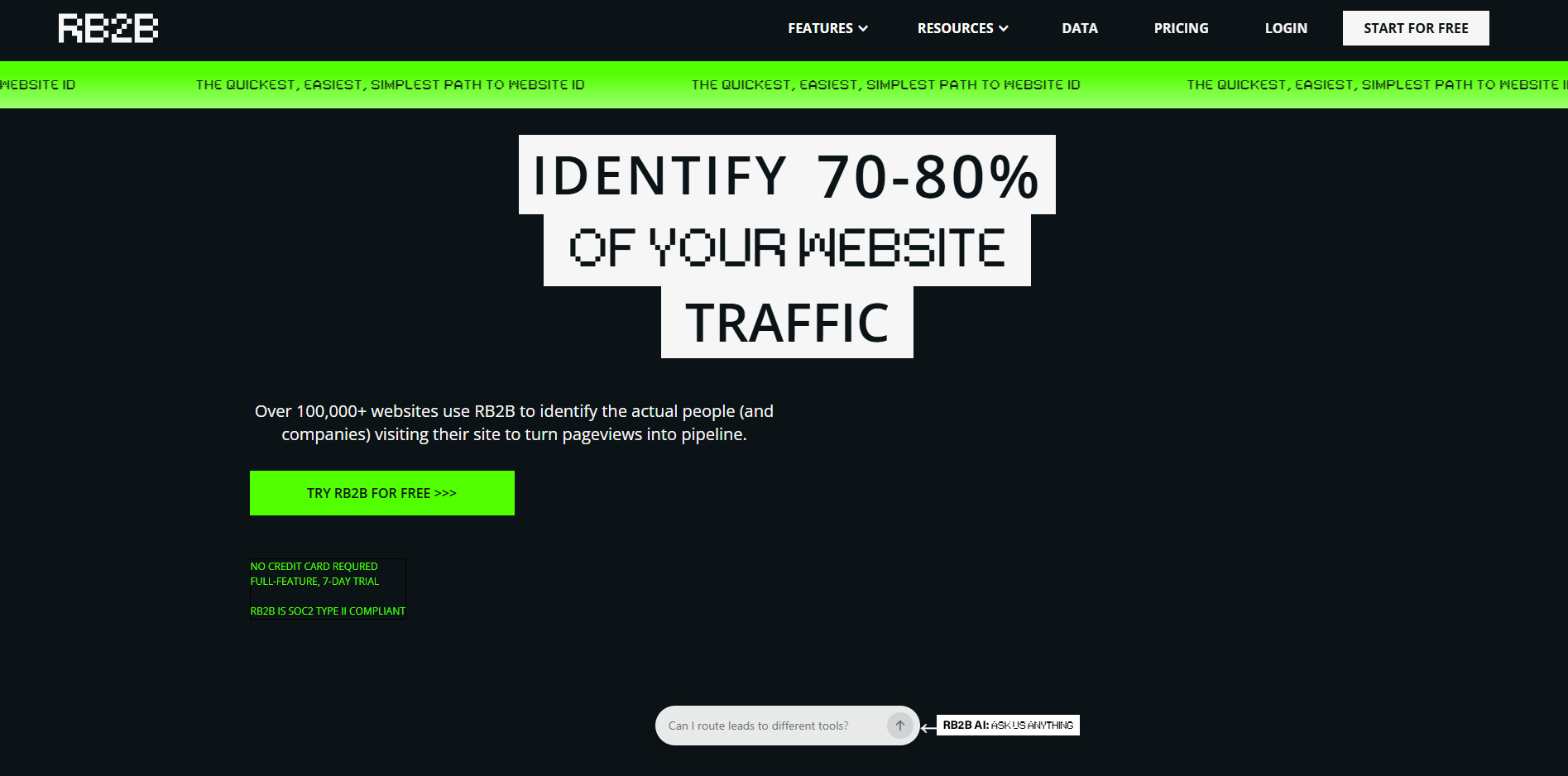
On its paid plans, RB2B can match some US visitors on your site to a LinkedIn profile and post them to Slack in near real time. Person-level identification is US-only, and only a share of eligible traffic gets matched.
The free plan is company-level only, with 150 monthly resolutions and no person-level data or email addresses. Starter, at $79 a month, adds person-level LinkedIn profiles for 300 resolutions; Pro starts at $149 with business emails and CRM integrations, and Pro+ adds premium resolution.
Match rates depend on your traffic. Reviewers report person-level matches on roughly 15% to 45% of US visitors, with the higher end on the premium Pro+ plan.
Best for: founders and small sales teams with steady US traffic who want a named person to reach today.
Where it falls short: it stops at the name, with no sequencing or deep enrichment. The privacy obligations around the pixel are also yours, so have counsel review it before it goes live.
2. Vector
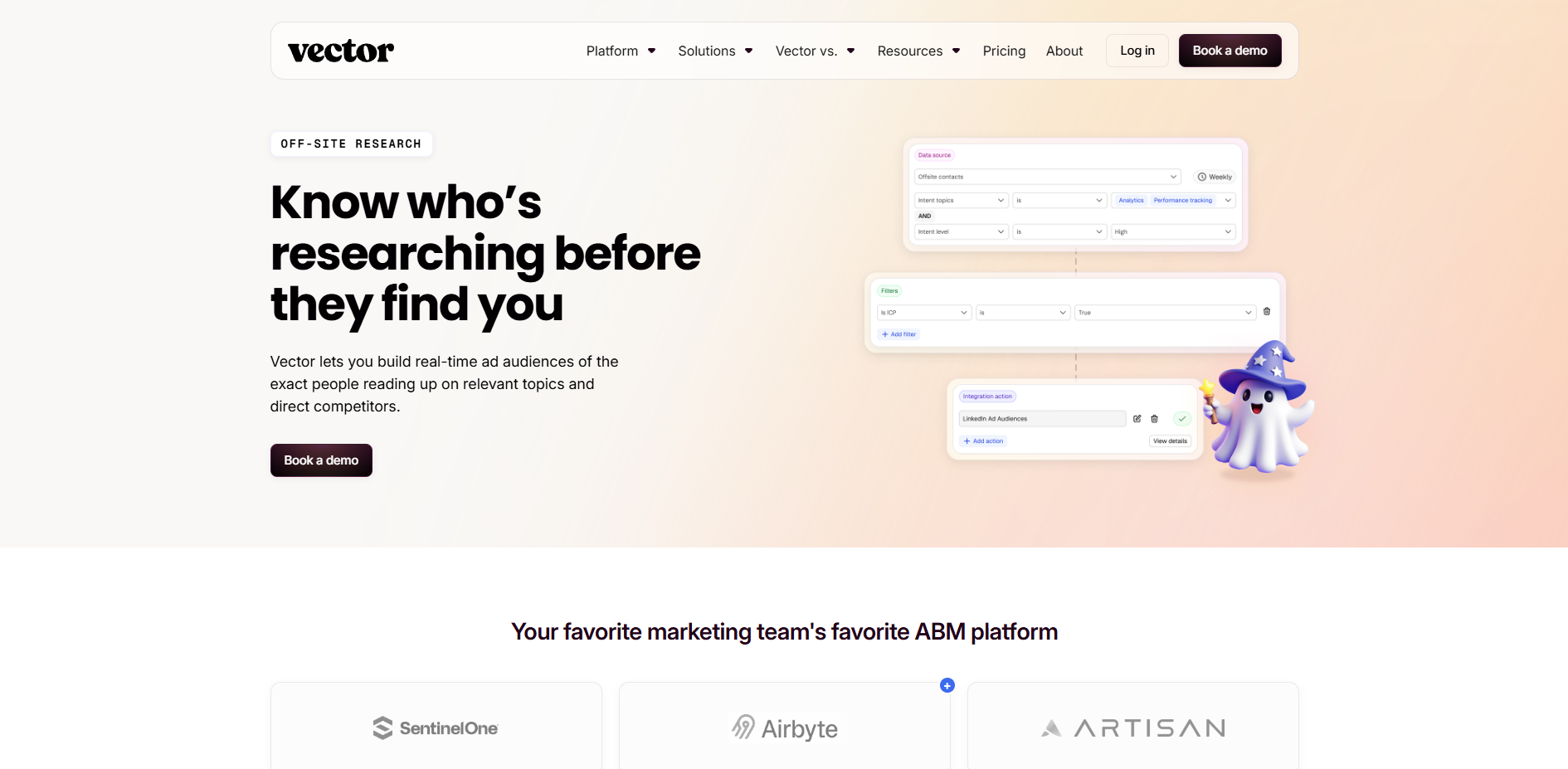
Vector goes a step past RB2B. It identifies a share of the contacts visiting your site, tracks contact-level research off your site across more than 20,000 topics, and syncs those people into ad audiences on LinkedIn, Google, Meta, and Reddit.
That puts it on the line between first-party and third-party intent. Its strongest use is paid media, where you can show ads to the actual buying committee instead of a whole company.
Pricing isn't public. Third-party reviews put visitor identification at about $399 a month and the ad audience product at $3,000 a month on an annual contract.
Best for: demand gen teams with real LinkedIn and Meta budgets who want intent to decide who sees the ads.
Where it falls short: it doesn't send emails or LinkedIn messages, so outbound still needs its own stack. The annual commitment on the ad product is a real hurdle for smaller budgets.
3. Common Room
Common Room pulls signals from your website, product, Slack or Discord community, GitHub, social channels, and CRM into one profile per person and account. For a developer tool or a product-led company, that's where the earliest buying behavior usually shows up.
It can also layer in third-party topics from Bombora, which makes it one of the few first-party platforms that reaches beyond your own properties.
Pricing is quote-based and billed annually. G2's listing puts plans at $12,000 a year, and price is the most common complaint in reviews.
Best for: product-led and community-led companies with an active community and product usage data worth scoring.
Where it falls short: product usage signals need engineering time to instrument, and outreach still runs in a separate tool. Teams without a real community end up paying for coverage they won't use.
The Best Second-Party Intent Data Providers
Second-party intent is someone else's first-party data, shared with you. It tends to catch buyers late, often while they're weighing you against a competitor.
4. G2 Buyer Intent
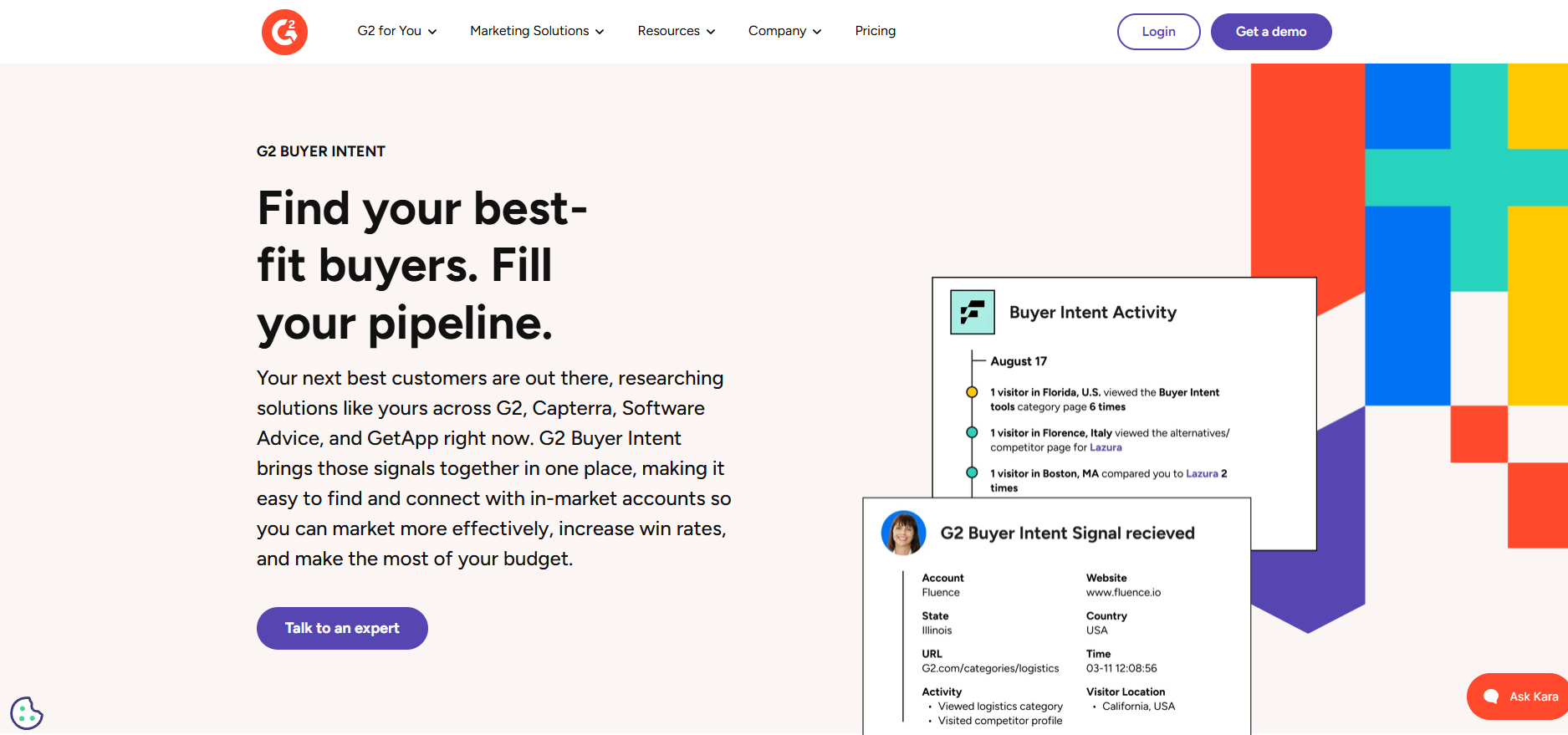
G2 Buyer Intent reports the companies viewing your G2 profile, reading reviews in your category, checking your prices, and comparing you with named competitors.
Each account gets a buying stage and an activity level instead of one blended score.
It got a lot bigger this year. G2 bought Capterra, Software Advice and GetApp from Gartner in early 2026, and since June the same Buyer Intent view covers research across all four sites.
G2's announcement of the expanded Buyer Intent reports that customers see up to twice as many signals and 36% more accounts actively in-market, at no extra cost to existing subscribers. Those are G2's own findings, not a result every customer should expect.
Buyer Intent is an add-on to a paid G2 plan and is priced on a call.
Best for: software vendors in categories where buyers actually read reviews, especially when you want to know which competitor an account is weighing.
Where it falls short: it only sees research on G2's four sites, the signals are company-level, and the most detailed competitor data sits in the higher tiers.
5. Crossbeam
Crossbeam compares your CRM with your partners' CRMs without either side handing over a full customer list.
The signal is an overlap, and when a partner already sells to an account you're chasing, you have a warm way in.
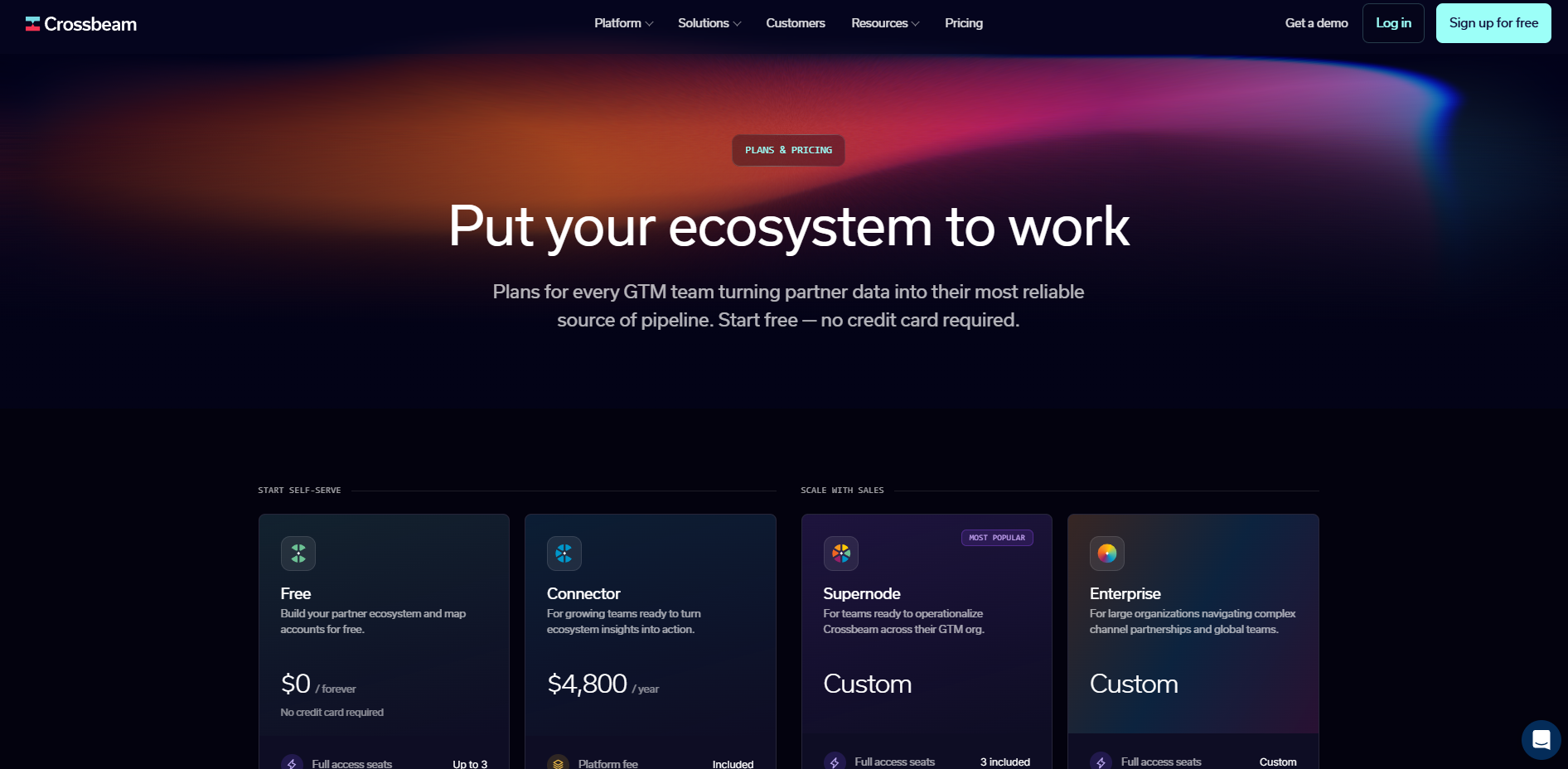
Crossbeam merged with Reveal in 2024 and kept the Crossbeam name. The free plan covers up to three seats and account mapping on up to 50 records at a time, and paid plans are billed annually.
Best for: companies with integration or technology partners who already share customers.
Where it falls short: an overlap tells you who can introduce you, and it says nothing about timing. Pair it with a timing signal. The Clay integration also sits above the entry paid plan.
The Best Third-Party Intent Data Providers
Third-party providers watch the open web for accounts that fit your market, sometimes before those accounts ever visit you. The trade-off is noise, since every competitor can buy the same feed and most of it stops at the company.
6. Bombora
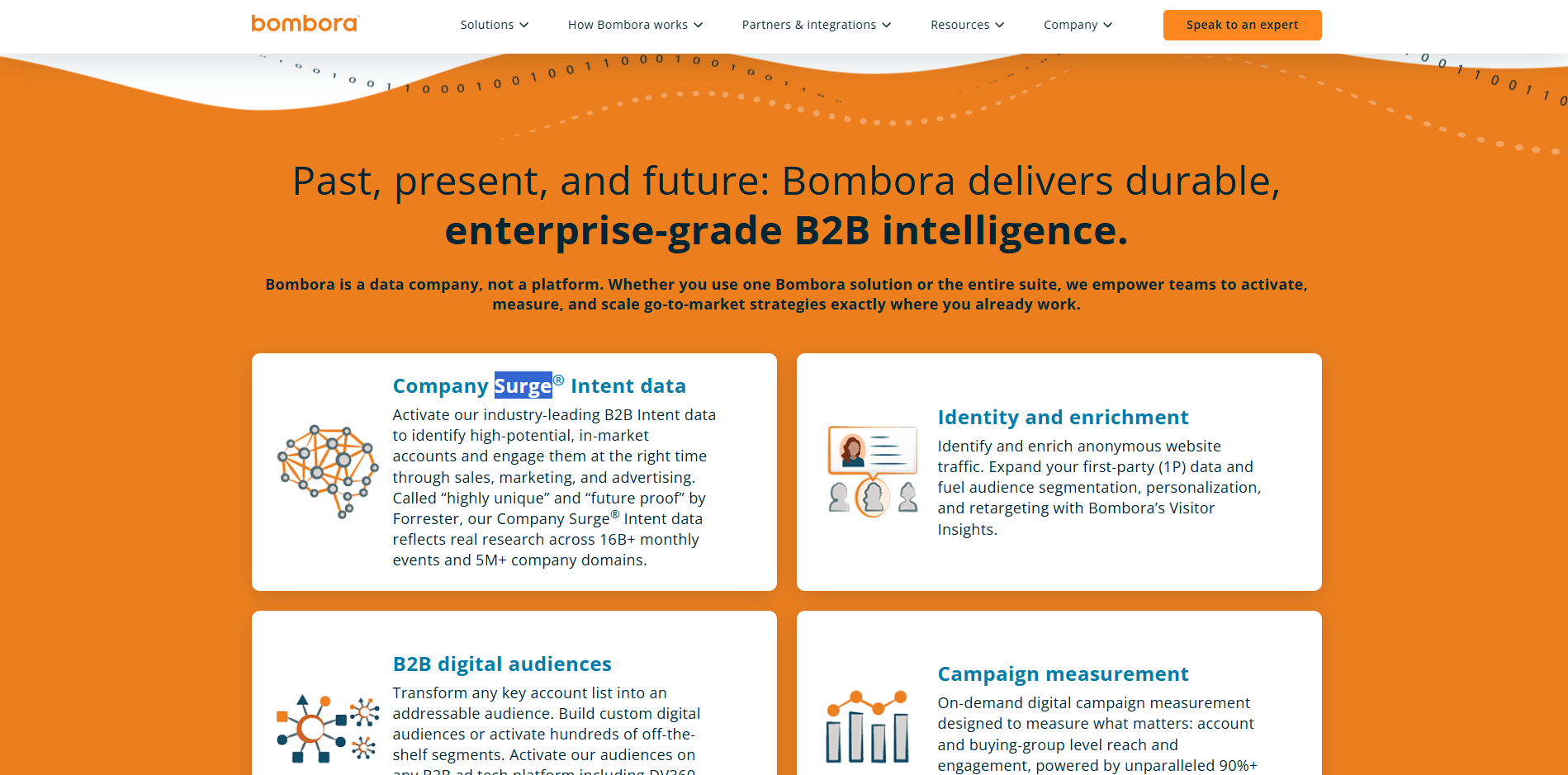
Bombora runs a data co-op of more than 5,000 B2B publisher sites. Its Company Surge score flags accounts reading about a topic well above their own historical baseline, across thousands of B2B topics.
Plenty of teams use Bombora without buying it directly, because 6sense and Demandbase both license the co-op data inside their platforms. Going direct makes sense when you run ABM from HubSpot or Salesforce without either of those.
There's no published pricing. Third-party estimates put entry contracts around $25,000 a year on an annual minimum.
Best for: ABM teams that want to see category research on accounts that haven't touched their site yet.
Where it falls short: it's company-level only, a surge can come from a single researcher, and the price assumes you already have a way to act on what it finds.
7. PredictLeads
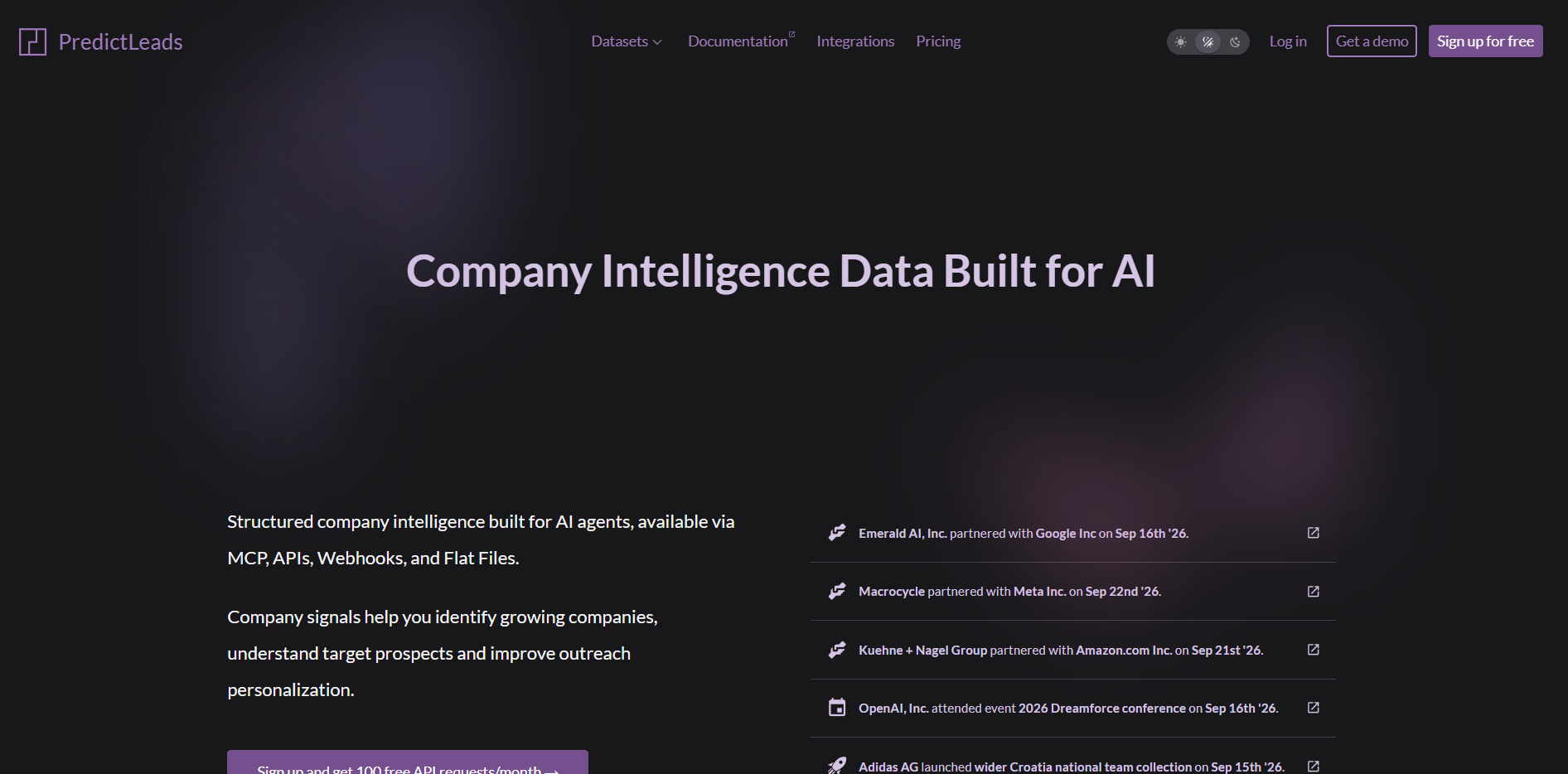
PredictLeads tracks company websites and career listings for job openings, funding and news events, and technology changes. It delivers them by API, webhook, flat file, or MCP server, with no dashboard, because it's built to feed another system.
Hiring is an easy signal to underuse. A company posting three SDR roles in a month is showing where its budget is going, which points to timing and fit rather than proof of demand for your product.
Datarade, a third-party data marketplace, lists dataset licenses from $6,000 a year per dataset.
Best for: RevOps and GTM engineering teams running signal-based outbound in Clay or their own stack.
Where it falls short: there's no contact data at all, and without an engineer or a Clay table on the receiving end, the webhooks have nowhere to go.
8. Crunchbase
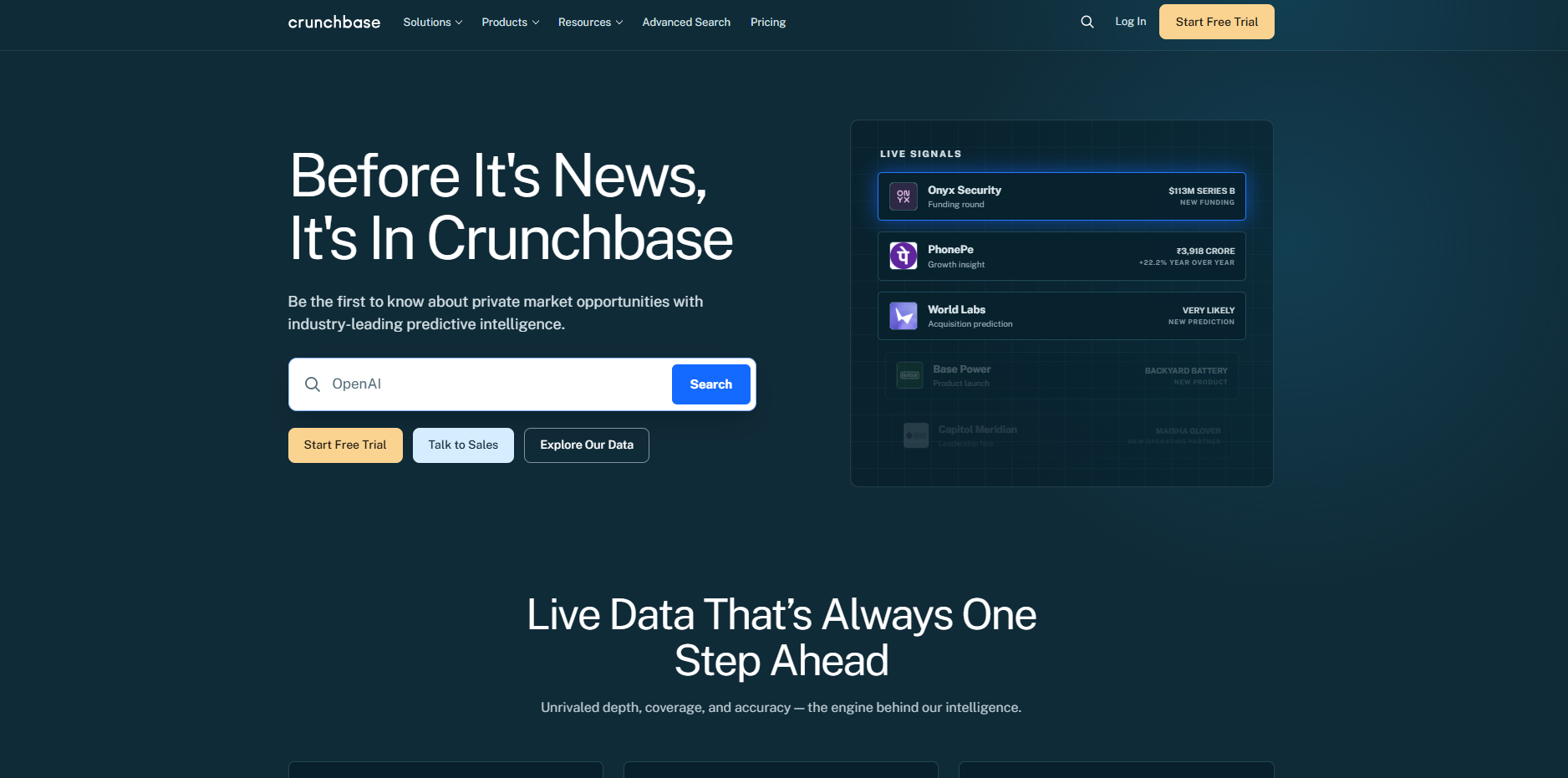
Crunchbase is the standard source for funding rounds. Its saved searches and alerts flag companies in your ICP soon after they raise.
Pro costs $49 per user per month on annual billing or $99 month-to-month, with exports capped at 2,000 rows a month. CRM integrations start on the Business plan, from $199.
Best for: teams selling to venture-backed companies, where a fresh round often brings new hiring and new tooling budgets.
Where it falls short: a funding round says the company has money, which is different from intent for your category. Contact data is thin, and the export cap runs out fast.
9. BuiltWith
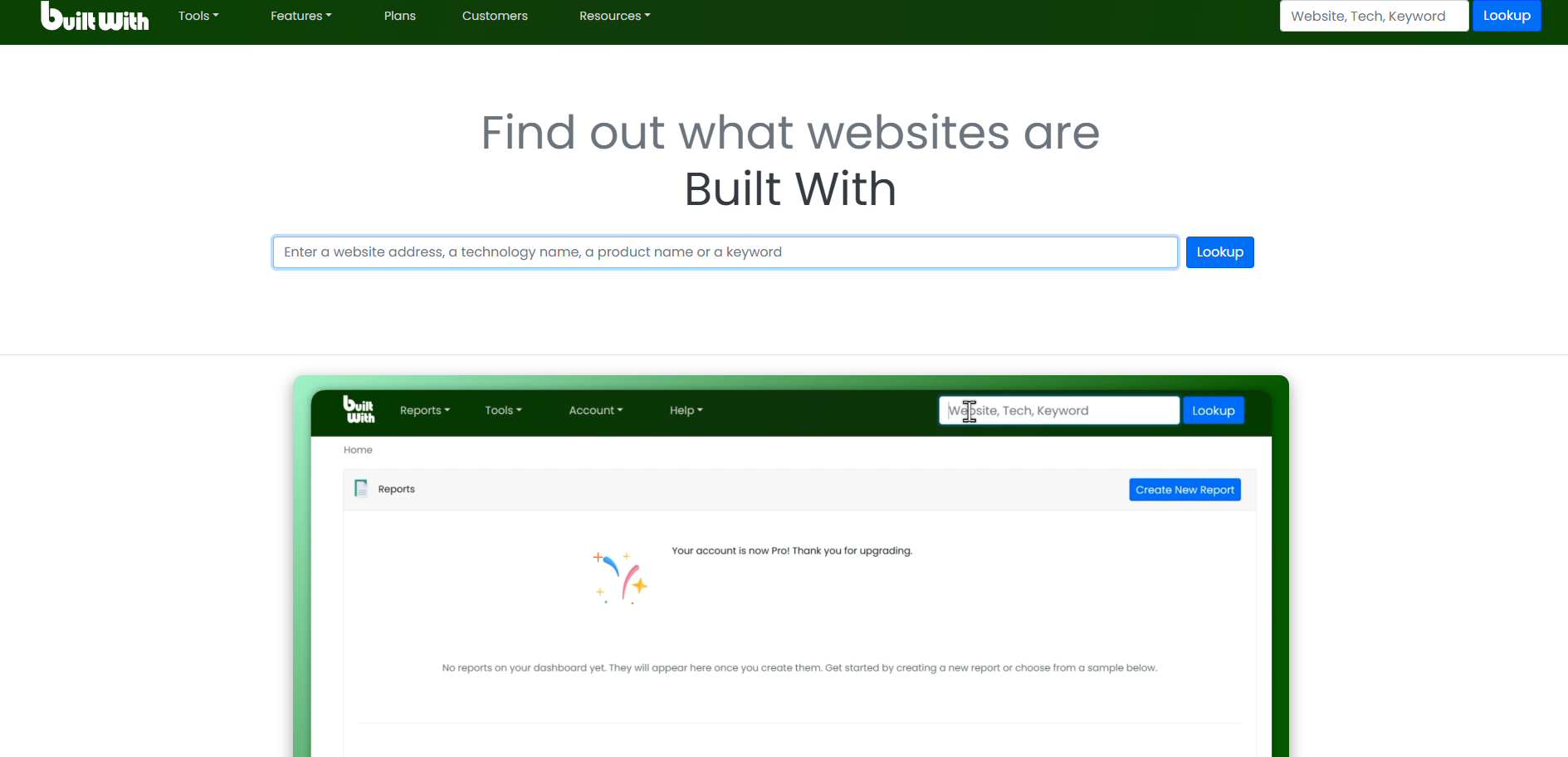
BuiltWith detects the technology running on hundreds of millions of domains and keeps the history. You can pull every company that added a competitor this quarter, or every one that just removed it.
Basic costs $295 a month for two tracked technologies, Pro is $495 with unlimited technologies, and Team runs $995. Single-site lookups stay free.
Best for: companies that sell into, alongside, or against a specific piece of technology.
Where it falls short: it only sees what runs on a website, so back-office tools are often invisible, and it gives you companies without contacts.
The Orchestration Layer
Clay collects and combines signals from many sources and doesn't produce original intent data of its own, so it sits in its own category.
10. Clay
Clay works differently from a single-source provider like RB2B or Bombora. It pulls from more than 150 data providers, PredictLeads among them, and turns their signals into one table you can qualify, enrich, score, and route.
That's why it sits across every layer as orchestration rather than an original intent source, though Growth, from $495 a month, does add Clay's own web intent, CRM sync, and HTTP API access. Launch starts at $185 for smaller builds, and plan limits apply to both.
Frontal is a Clay Elite Studio Partner, and much of the work we do runs on Clay. Weigh this entry with that in mind.
Best for: teams that already have two or more signal sources and want them working as one system.
Where it falls short: separate meters for data credits and actions make spend hard to predict, and a Clay table with no owner goes stale quickly. The Clay agency breakdown covers who builds and maintains one.
Where Reddit Fits in Your Intent Data
Some of the most useful buying signals never pass through a provider. Before booking a demo, some founders and engineering leads ask a subreddit which tool to switch to, and they can be more candid there than on a sales call.
Strictly speaking, that's third-party intent, because it happens on someone else's platform. It reads more like first-party intent, though, since the buyer is describing their own problem in their own words.
A recent r/b2bmarketing discussion on tracking these signals makes the problem plain. In the author's own experience, broad keyword alerts for a phrase like CRM alternative mostly returned noise, which they put at around 90% irrelevant. That's one person's experience, not a benchmark.
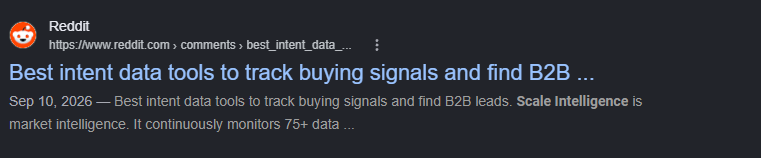
The post splits the options into two camps. It describes account-level tools that map Reddit conversations back to companies in your market and route alerts into Slack or your CRM.
The DIY route pipes keyword alerts into a spreadsheet, and then someone has to judge which threads are relevant to your market.
The post leans toward one vendor, so weigh its tool pick accordingly. Its setup advice is the part worth keeping.
- Track problem phrases instead of product names. Switching from a named competitor, a complaint about a price increase, or a question about a specific bottleneck points to a live decision far more often than a category keyword.
- Don't guess who's behind a username. Unless someone says where they work, treat the thread as market insight and respond in the thread instead of trying to identify and pitch them.
- Answer the question in the thread. Subreddits punish product drops, and a genuinely useful reply earns more trust than any link.
The hard part is the same with every intent source. Collecting the signal is cheap, and deciding which signals are relevant and credible is where the real work sits.
Why an Intent Data Provider Is Only Half the Job
Every intent data provider ends in the same place. A signal lands in Slack, a dashboard, or a CRM field, and then someone has to decide what to do with it.
That decision is where plenty of programs stall. Signals pile up in a channel nobody owns, and the account that compared you with a competitor on Tuesday hears from you three weeks later.
Alex Vacca made the same point after reviewing 100+ outbound campaigns. The failures traced back to targeting far more often than to copy.
The signals he trusts for that timing include G2 and Capterra research, job postings for roles your product replaces, and recent funding. His tools for catching them are PredictLeads, Common Room, and Clay.
Intent data fixes targeting once a workflow turns it into who gets contacted, when, and for what reason. Until then, it's an expensive alert.
Here's a quick test for any vendor or agency. Ask what happens between the signal and the first email. If the answer involves a person copying rows between tools, you're paying for their hours.
How to Turn an Intent Signal Into a Booked Meeting
Alex has built this chain end to end on Frontal's YouTube channel, with Clay doing the data work and Claude making the judgment calls.
One build starts from anonymous website visitors, the other from the people engaging with LinkedIn posts, and both end with a qualified contact routed to outreach.
His Clay intent build walks through one version of the chain from signal to outreach:
Start with the LinkedIn version, because the signal is free.
Someone who liked three of your posts this month is a different lead from a stranger, so the team exports those engagers, enriches them in Clay, and routes the ICP matches into outreach.
ColdIQ, now Frontal, credited a seven-step version of that workflow with 120 meetings for its own team in a single month.
Whichever signal starts the chain, the steps stay the same.
Capture the Signal in One Place
Send every signal to a single table, usually in Clay, fed by webhooks from RB2B, G2, PredictLeads, a Reddit monitor, or your CRM. A signal that lives in its own tab gets checked when someone remembers.
Qualify the Account Against Your ICP
Plenty of signals come from accounts you'd never sell to. Students, competitors, current customers, and companies outside your size range get filtered out first, before anything spends a credit.
This is where Claude earns its place in the build. It can read a company's site and a visitor's title and judge them against a written ICP, which a headcount and industry filter can't do.
Alex's Claude lead system walkthrough shows how Claude and Clay split this kind of work inside a full build:
Enrich the Account to a Named Person
Company-level signals need a person attached. A waterfall across several email providers finds the right contact on the buying committee. First-party tools like RB2B skip most of this step because they already name someone.
Score the Account on Strength and Recency
Score each account on how strong and how recent its signals are. A direct demo request can go straight to a rep, while weaker signals can wait for more context. Weight recent signals highest and let old ones decay, since a price check from March tells you little in September.
Route It With the Reason Attached
High scores go to a rep or a sequence the same day, with the signal written into the brief so the rep knows why this account and why now. Lower scores go into an ad audience and wait for a second signal.
Keep people in charge of the campaigns. Automation can do the gluing, and someone on your team should own the targeting, the messaging, and the controls on what goes out under your name.
The outbound list playbook covers how the account list underneath all this gets built. If you'd rather hand the running of it to someone, the outbound agency comparison lays out who does it well.
Where Intent Fits in Your GTM Funnel
Intent is one stage in a longer funnel. Alex's funnel breakdown runs from awareness to consideration, intent, conversion, and loyalty, with each stage feeding the next.
Seen that way, a provider can't create demand on its own. Some signals come from accounts your ads and content have already reached, and a third-party signal can just as easily come from an account that's never heard of you.
| Stage | What the buyer is doing | Signals you'll see | Where they come from |
|---|---|---|---|
| Awareness | Meeting your brand for the first time | Ad impressions, post views, a first site visit | LinkedIn Ads, Vector, RB2B |
| Consideration | Learning about the problem and the options | Content engagement, community activity, category research | Common Room, Bombora |
| Intent | Comparing vendors and building a shortlist | G2 comparisons, repeat visits, new hires in the buying team | G2 Buyer Intent, RB2B, PredictLeads |
| Conversion | Talking to sales and deciding | Demo requests, replies, several people from one account engaging | Your CRM and sequencer |
| Loyalty | Using the product and expanding | Product usage, champion job changes, partner overlaps | Common Room, Crossbeam, Clay |
Teams that rely only on third-party intent can end up chasing the same surging accounts as competitors on the same feed. Ads and content aimed at your target list mean more of those accounts may already recognize your name when they surge.
The LinkedIn ads funnel covers that warm-up side in detail.
Need a Team to Put the Signals to Work?
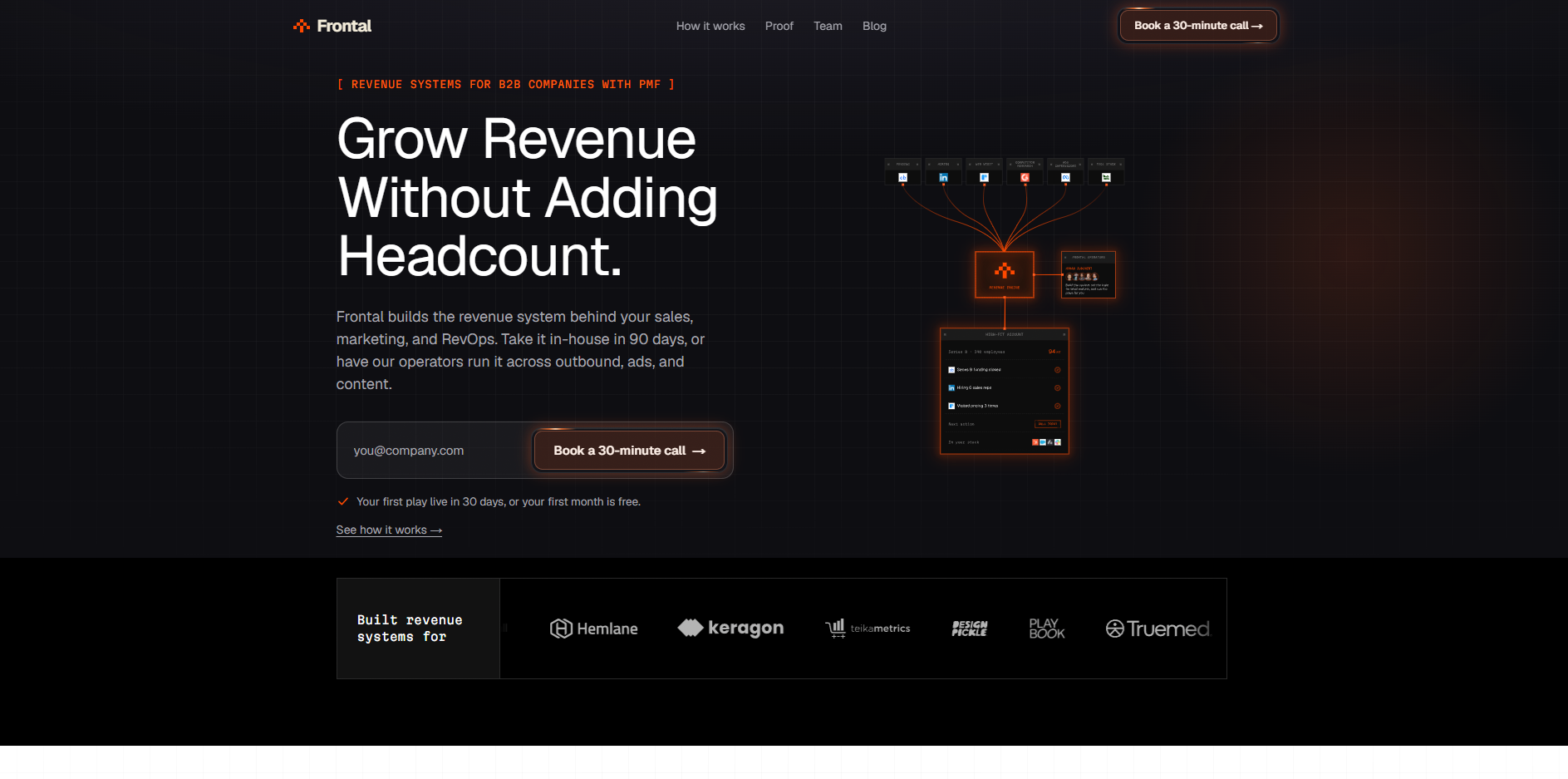
Buying intent data gives you more information. Someone still has to decide which accounts matter, build the workflows, and run the campaigns.
Frontal handles that work alongside your team. We connect useful signals to your CRM, prioritize the right accounts, and run the agreed outreach and campaigns.
Our RevOps work keeps the data, routing and reporting usable, and our GTM, Ads and Content Engineering teams act on it where those services are in scope.
You can start with the part that needs fixing. We build in your tools, document the work, and keep improving it against the outcomes we agree together.
Experienced operators own the targeting, messaging, and campaign controls, and they keep optimizing once the work is live.
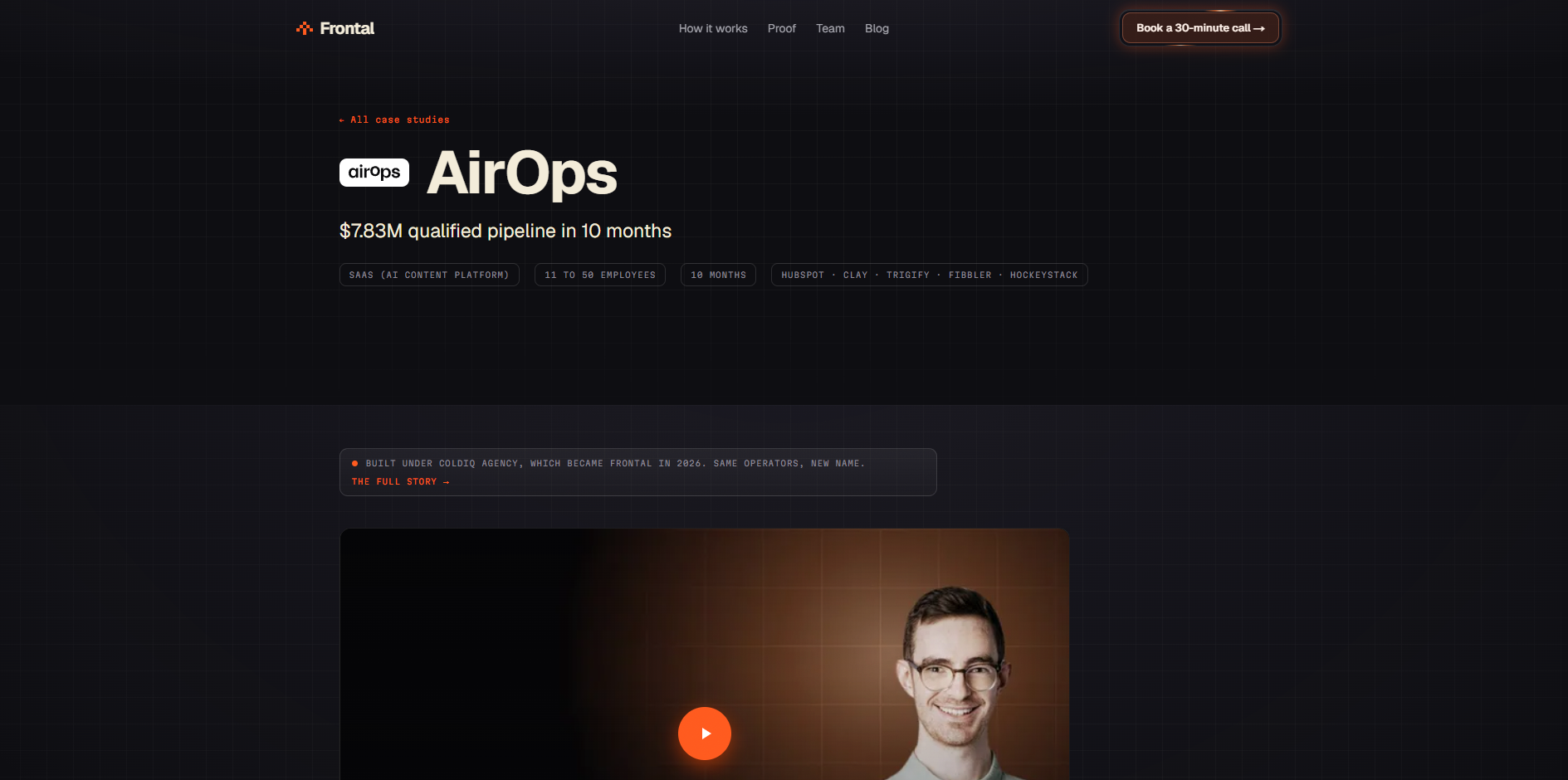
The results come with the metric defined. For AirOps, a coordinated account-based program generated $7.83M qualified pipeline and $1.52M in closed-won revenue over 10 months, inside their own HubSpot, without adding SDRs.
| Client | Result | What the metric counts |
|---|---|---|
| AirOps | $7.83M qualified pipeline and $1.52M closed-won revenue over 10 months | A coordinated account-based program inside their HubSpot, with no additional SDRs |
| Aircall | 3,655 accounts enriched in 6 months | Accounts in a live, self-refreshing view of their market, not a one-time export |
| Hemlane | 830 qualified contacts at a 5.5% reply rate | Contacts that met the agreed qualification bar, from a single campaign |
| Teikametrics | $300K+ pipeline in nine months and 100+ hours saved monthly | Pipeline created and time saved through outbound automation, not closed revenue |
Where we fall short: we don't sell data subscriptions, and we won't guarantee a meeting count. If your product hasn't shown demand yet, you'll learn more by testing a few signals yourself before bringing in a team.
If you're weighing us against other partners, the GTM agency list and the ABM agency roundup cover the alternatives.
FAQs About B2B Intent Data Providers
What Is Buyer Intent Data?
Buyer intent data is a record of actions companies take before they buy, like reading about a category, comparing vendors, or visiting your site repeatedly. Providers turn those actions into account or contact alerts, so your team can reach out while the research is still happening.
What's the Difference Between First, Second, and Third-Party Intent Data?
First-party data comes from your own site, product, and community. Second-party data is another company's first-party data shared with you, like G2 research activity or a partner's CRM overlap.
Third-party data is gathered from the wider web through publisher co-ops, job boards, and funding news. Anyone can buy the same third-party feed, which is why it works best as a first filter.
What Are the Best Buyer Intent Data Providers in 2026?
It depends on the layer you're missing. RB2B and Common Room lead first-party, G2 Buyer Intent leads second-party now that it includes Capterra, Software Advice, and GetApp, and Bombora remains the default third-party research feed.
For hiring, funding, and technology changes, PredictLeads, Crunchbase, and BuiltWith cover the ground. Clay is a common way to combine them.
Which Intent Data Providers Are Best for Sales Conversion?
The ones closest to a buying decision. RB2B names a person on your site right now, and G2 Buyer Intent shows accounts comparing you with a competitor.
Both convert best when a rep reaches out the same day with a reason that fits. That part depends on your workflow far more than on the data.
Do I Need an Intent Data Provider or a Workflow?
Both, and the workflow is the harder part. A provider is a contract you sign once. The workflow needs someone to qualify, enrich, score, and route every signal, every week.
If nobody owns that yet, start with one provider and prioritize its most relevant, credible signals before adding a second.
Which Intent Signals Should You Track First?
Start with the ones closest to a decision. G2 or Capterra research, repeat engagement with your own posts, job postings for roles your product replaces, and recent funding all make Alex Vacca's shortlist, and each one maps to a provider, from G2 Buyer Intent to PredictLeads and Crunchbase.
Can You Track Buying Intent on Reddit?
Yes, and it's often where buyers are most candid about switching. Track problem phrases like a complaint about a competitor's price increase instead of category keywords, and treat a thread as market insight unless the person has said where they work.
When you do engage, answer the question in the thread first. A pitch dropped into a subreddit usually costs more than it earns.
How Accurate Is Intent Data?
It depends on the layer. First-party and second-party signals describe real actions on known sites, so the main risk is matching activity to the wrong company or person.
Third-party topic surges are modeled from content consumption and produce more false positives. That's why teams often look for a second signal before a rep picks up the phone, though a direct request like a demo booking shouldn't wait.
How Do You Combine Intent Signals From Different Providers?
Send everything into one table keyed to each account's domain, usually in Clay. Score each account on how strong and how recent its signals are, then route by score.
If your team doesn't have the hours to build it, the lead generation comparison covers partners who do.
Is Website Visitor Identification Legal?
It depends on where your visitors are, what data you collect, and how you use it. Person-level identification is more sensitive than company-level, and US vendors face active litigation under state wiretapping and privacy laws, including in California.
Rules differ across US states, the EU, and other regions, so have counsel review your disclosure, consent setup, and the specific tools before launch. This isn't legal advice.
Build Your Intent-Driven GTM With Frontal
Chances are you already have more signals than your team can work. What's usually missing is the system that decides which ones matter and gets a rep there first.
On a 30-minute discovery call, we'll look at the signals your market actually produces and show what a signal-to-meeting workflow would look like inside your own stack. If the signals in your market are too thin to be worth it, we'll tell you.
Book a call to discuss where your current process breaks down and what Frontal could take ownership of.