An agency can book you thirty meetings next month and leave your pipeline exactly where it was. Half don't show, a few are the wrong title, and the rest were never going to buy.
That's the trap with a lot of SaaS lead generation. Activity is easy to count, so activity is what gets sold.
We compared eight of the best SaaS lead generation agencies for 2026 on eight criteria you can check yourself, starting with named results and a defined metric.
Key Takeaways
- Frontal is the pick for SaaS past product-market fit that wants outbound, ads, and content running off one account list instead of three vendors. First play live in 30 days, or the first month is free.
- Belkins, CIENCE, and SalesRoads are the volume plays. All three publish a starting price, which puts them ahead of most of this category on transparency alone.
- Operatix and Martal Group rent you a sales team. Nothing structural stays behind when the contract ends. That is the right purchase if you need enterprise coverage in a new region and do not want to own anything afterward.
- Kalungi sells a marketing department rather than a lead gen service. It belongs on your shortlist if the missing piece is senior leadership, and the entry price reflects that.
- The gap in 2026 is implementation, not tools. Almost every agency here runs the same data providers. What separates them is whether a person still glues the steps together by hand.
Top SaaS Lead Generation Agencies at a Glance
Short answer: Frontal for SaaS past product-market fit that wants outbound, ads, and content run as one system inside its own stack. Belkins or CIENCE if you want appointment volume and already have a team ready to take the calls.
Prices are what each company published at the last check in September 2026. Where a row says not public, the number comes on a call.
| Agency | Best for | Published pricing | What stays with you |
|---|---|---|---|
| Frontal | SaaS past product-market fit that wants outbound, ads, and content on one account list | Not public. Scoped on a call, billed month to month | Everything. The build sits in your CRM and your Clay workspace |
| Belkins | Appointment setting at scale across email, LinkedIn, and phone | From $5,000 a month | Meetings and a contact list. The sequences stay with them |
| CIENCE | Outbound volume on top of a contact database the same group owns | $7,499 for the first month all in. SDR capacity quoted separately | Depends on which product. The 60-day build is handed over, the managed program is not |
| Operatix | Enterprise and upper mid-market software selling into complex buying groups | Not public. Reported retainers from $8,000 | Nothing. The SDR team leaves with the contract |
| Martal Group | SaaS opening North America with reps who sound local on the call | Not public. Three tiers quoted on request | Nothing structural. You rent the reps and the platform |
| SalesRoads | US teams that want a dedicated SDR pod with a replacement guarantee | From $11,950 per 4-week engagement, listed on their site | The meetings and the call recordings |
| Kalungi | Post-product-market-fit SaaS with budget but no senior marketing leader | Full service from $45,000 a month. Coaching from around $6,500 | Strategy documents and the T2D3 playbook your team keeps running |
| Cleverly | Small teams testing whether LinkedIn works for their market at all | $397, $697, and $997 a month | Nothing. Templates and the tooling are theirs |
What We Considered When Choosing These Agencies
We held ourselves to the same eight criteria as everyone else, and you can run them on any agency that is not on this list.
- SaaS fit rather than general B2B. A team that has sold seat-based software knows what a champion job change means. A generalist shop treats your ICP like any other list.
- Named, checkable results. A client name, a number, a time window, and a defined metric. Pipeline generated across all clients was not counted.
- Channel coverage. Whether outbound, paid, and content run against the same account list by the same team, or arrive as three invoices that disagree with each other.
- Time to the first campaign. Published commitments only. Six weeks is the common answer, and anyone promising replies in week one is selling send volume.
- Reporting you can see. Reply rate, positive reply rate, meetings held, and account health, visible in your own tools rather than in a monthly deck.
- Data depth. Enrichment across several sources and live signals beats a Sales Navigator export. Clay partner tier is the fastest proxy, and Elite Studio is the top of it.
- Contract structure. Month-to-month, a fixed term, or a minimum commitment with a review point written into it. Twelve months with no exit is the single most expensive thing on this list to get wrong.
- What they refuse to do. An agency that names the channels and company stages it is wrong for is easier to trust on everything else.
Who This List Is For
Outsourced lead generation pays back for a narrow profile of SaaS company and quietly burns runway for everyone else.
| Worth talking to an agency | Not yet, or not at all |
|---|---|
| You are past product-market fit and can name the ten accounts that closed fastest last year. | You are still testing ICP and messaging. Outbound turns a fuzzy ICP into a fuzzy pipeline, faster. |
| Your ACV is high enough that two or three closed deals a month cover a $10,000 retainer. | Your motion is self-serve and product-led, where a human SDR adds cost without adding conversion. |
| Founder-led selling has hit the ceiling of one calendar. | You want a guaranteed meeting count. The reliable way to hit one is to loosen the targeting. |
| You already pay for HubSpot, Salesforce, or Clay and get very little back from them. | Nobody internally will own the system after handover, which is where most builds go stale. |
Best SaaS Lead Generation Agencies: In-Depth Review
1. Frontal
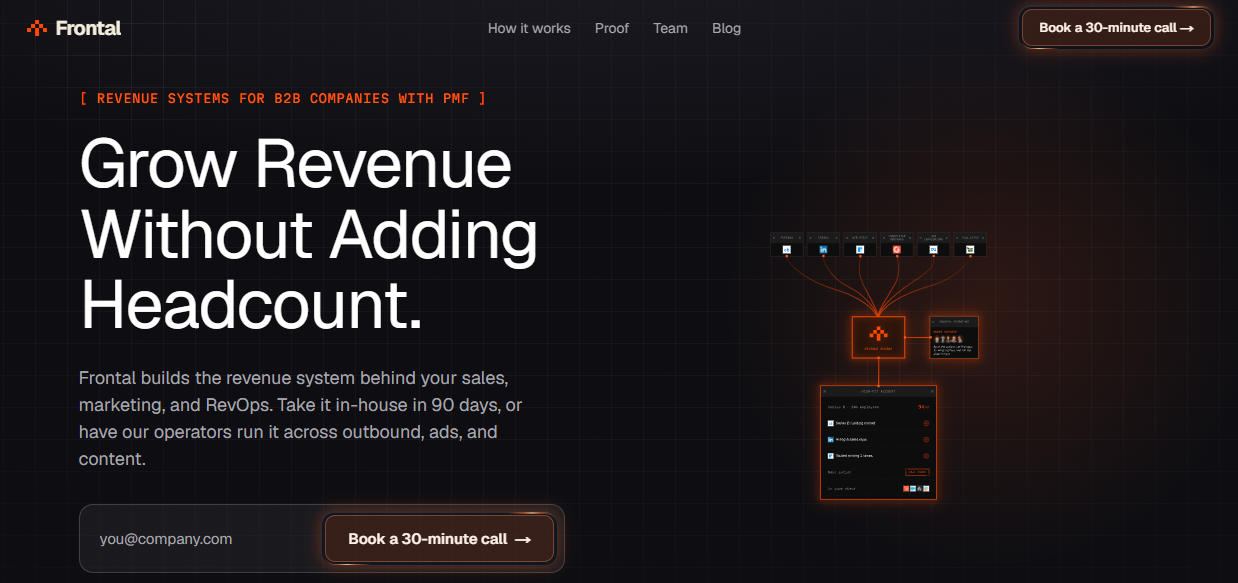
Frontal is an AI-native revenue partner for B2B companies past product-market fit, and one of four Clay Elite Studio Partners in the world.
ColdIQ Agency became Frontal in 2026. Same operators, same client roster, same partnership, and the record of 275+ companies served carries over with the name.
Lead generation is not sold here as a standalone service. Instead, three services run off the same picture of your market.
First, GTM engineering fires outbound off live buying signals. Ads engineering then retargets those same named accounts, so the first email does not land completely cold.
Finally, content engineering drafts in the founder's voice from call recordings, then pulls the people who engage into outbound. Frontal founder Alex Vacca walks through the Claude lead system end to end, and the step-by-step guide covers the same build in writing.
In the walkthrough, Alex builds the chain a SaaS team would run: signals come in, Claude judges each account against the ICP, Clay enriches it to a named person, and the result lands in outreach without anyone copying rows between tools.
Whichever services you run, the build happens inside your stack. Records get unified and enriched, a signal layer watches funding news, job changes, site visits, and engagement, and routing sends the account to the right rep with the reason attached.
A human approves every send, but nobody has to glue the steps together by hand. If you would rather own it outright, there is a version called the Revenue Engine where we build it alongside your team, and you keep the whole thing.
Run one service, and it works on its own. Run all three, and they compound into a GTM flywheel, because the accounts seeing your ads are the accounts your content warmed and the accounts outbound is about to reach that week.
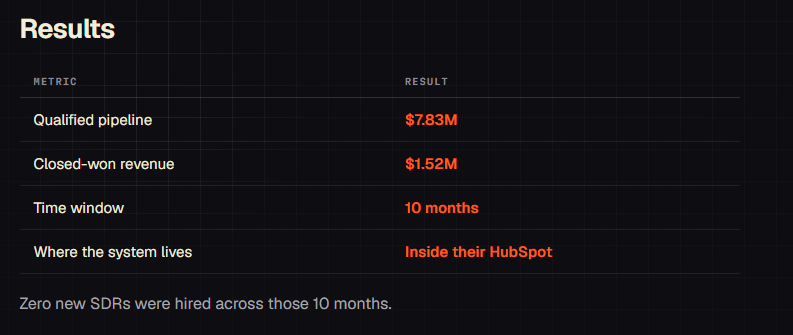
The results are named, with the metric defined. AirOps generated $7.83M qualified pipeline plus $1.52M closed-won over 10 months, with no new SDRs hired, inside their own HubSpot.
Hemlane's 830 qualified contacts came from a single campaign at a 5.5% reply rate, and Teikametrics closed $360K of contract value in the first 90 days.
For Aircall, the build turned 3,655 accounts into a self-refreshing view of their market, which the Aircall story below walks through.
What it costs: billed month to month with no annual lock-in, and usually somewhere between mid four figures and mid five figures a month. Where you land depends on how much of the system you want run, since a 300-account list and a 30,000-account market are very different builds. The exact number comes out of a scoping call, not a price sheet.
Best for: SaaS past product-market fit with a focused set of target accounts, usually bought by a Head of Growth, CRO, or RevOps lead who wants to own the system afterward.
Where we fall short: we do not run cold calling, we will not guarantee a meeting count, and we are the wrong call before product-market fit. What we do commit to is your first play live within 30 days, or your first month is free.
2. Belkins
Belkins has run appointment setting since 2015 across email, LinkedIn, and phone, with copywriters, lead researchers, and deliverability specialists in-house.
Their published starting point is $5,000 a month for roughly 100 appointments a year across three channels, with the first month spent on infrastructure and testing. Their Clutch record is one of the deepest in the category.
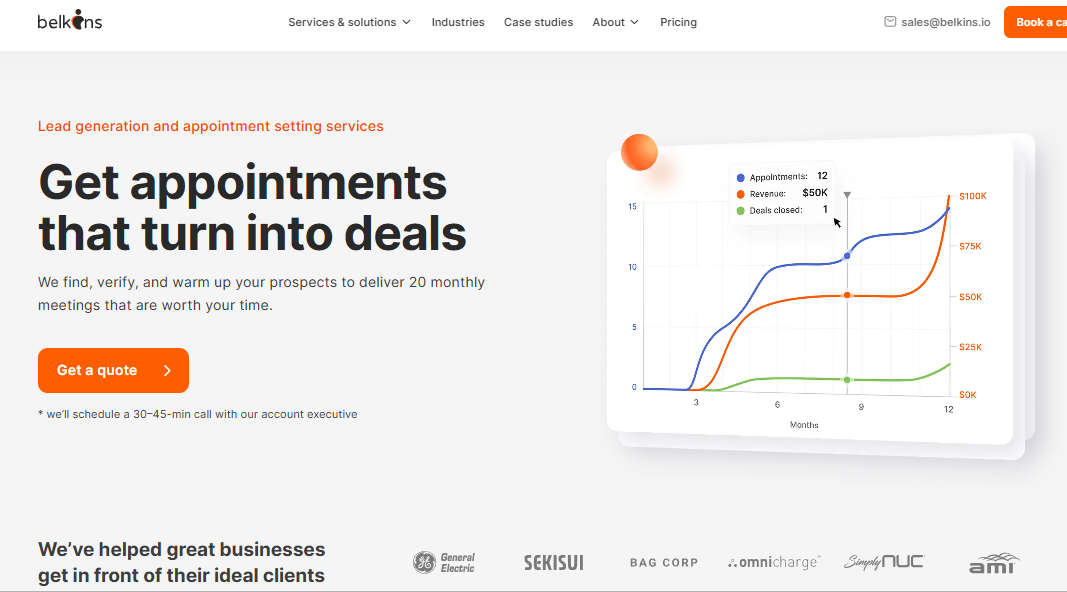
Best for: established SaaS companies that want a process-heavy outbound engine and a team large enough to absorb turnover without the program stalling.
Where it falls short: the workflows are more manual than Clay-native shops, SaaS is one vertical among many rather than the whole business, and the entry price rules out smaller teams.
3. CIENCE
CIENCE is the managed services arm of the graph8 group, which also owns the data platform its SDRs run on. You get an outsourced team working off a contact layer the same group maintains rather than one assembled from third-party vendors.
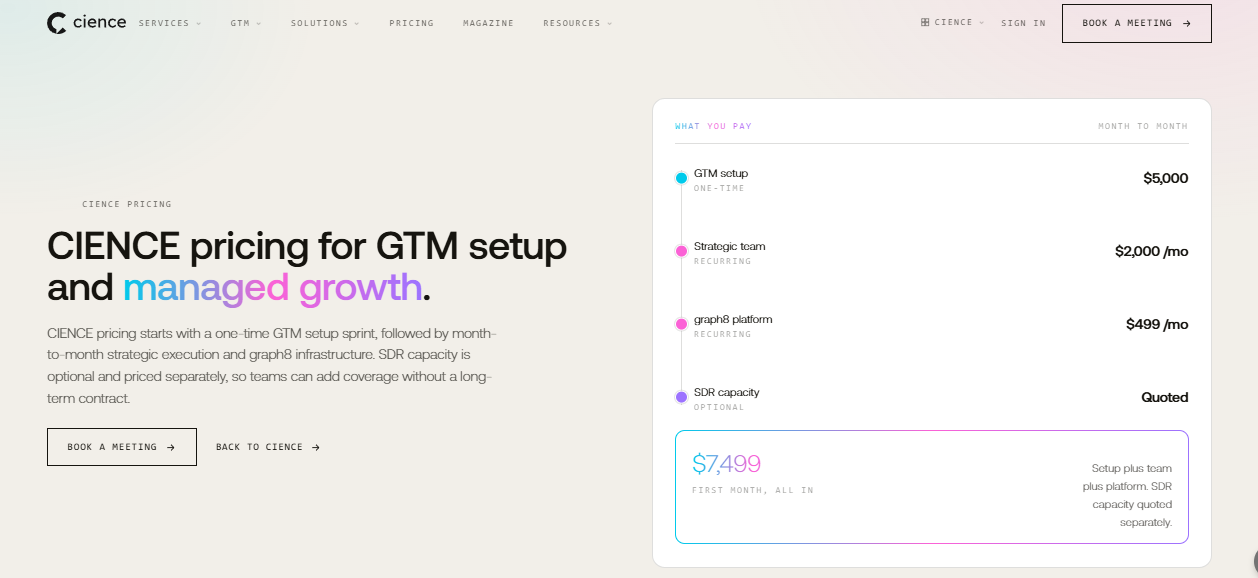
Pricing is public, which is rare here. A one-time GTM setup is $5,000, the strategic team is $2,000 a month, and the graph8 platform is $499 a month, which comes to $7,499 for the first month all in. SDR capacity is quoted separately on top.
Best for: mid-market and enterprise SaaS that needs outbound volume across several markets and wants the data included rather than sourced separately.
Where it falls short: third-party reviews are split. Clutch's own summary of verified reviews describes lead quality and conversion as inconsistent, with some clients happy and others unhappy on value for money. Start with a limited pilot and check quality before scaling spend.
4. Operatix
Operatix sells sales development to software vendors and nothing else, which shows up in the first call a rep makes on your behalf. It was acquired by memoryBlue and now sits inside a larger global group.
The model is account-based and multi-language, with coverage across North America, EMEA, and APAC. That geographic reach is the reason enterprise software teams shortlist them for a new region.
No pricing is published anywhere. Third-party reviews put retainers from around $8,000 a month upward, depending on how many dedicated reps you take.
Best for: higher-ACV software selling into enterprise buying groups, especially when you are opening Europe and need reps who speak the buyer's language.
Where it falls short: the research is generalist across verticals, the minimum program size is too big for early companies, and the SDR team leaves with the contract. Nothing stays in your stack.
5. Martal Group
Martal runs onshore senior sales executives out of the US, Canada, the EU, and LATAM, layered with intent data and an AI SDR platform. It is closer to a rented sales team than to a campaign vendor.
Three tiers run from lead generation only, through closing, to account management, so it can cover an entire sales function for a company that has not hired GTM leadership yet.
Best for: international SaaS opening North America, where a rep who sounds local changes what happens in the first 30 seconds of a call.
Where it falls short: no public pricing on any tier, and a full-cycle model that spreads attention across channels rather than going deep on any one of them.
6. SalesRoads
SalesRoads builds dedicated SDR pods out of US-based reps and puts a replacement guarantee behind them, which matters more than it sounds when rep turnover is what usually stalls an outbound program.
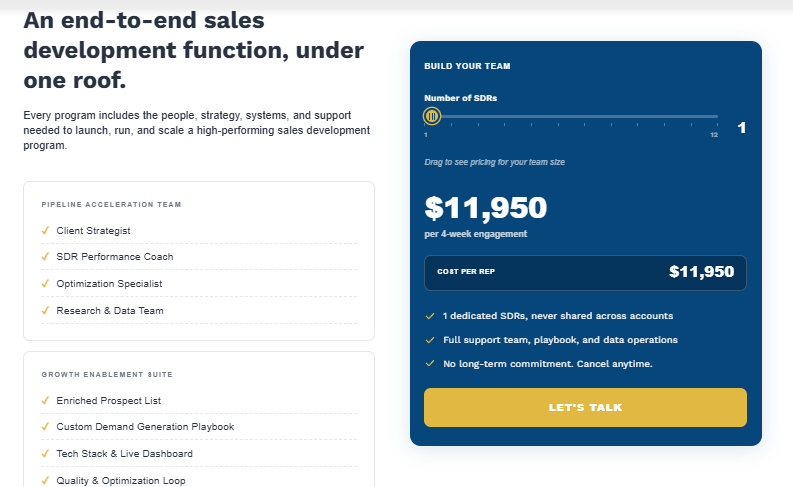
Their own pricing page puts the entry point at $11,950 per 4-week engagement for one dedicated SDR, with no long-term commitment. That is a published number on the vendor's own site, which is more than most of this category offers.
Best for: US SaaS teams that want a named pod of reps and a contract with a stated remedy when someone leaves mid-program.
Where it falls short: phone-led motions need a sales team ready to take those meetings, the tooling is less current than Clay-native shops, and there is no ads or content layer alongside.
7. Kalungi
Kalungi is a full marketing function for B2B SaaS, built around a fractional CMO plus an execution team, all working from the T2D3 growth methodology. It is on this list because SaaS teams shortlist it against lead gen agencies, not because it is one.
Full service starts at $45,000 a month, and a lighter coaching tier starts around $6,500. Published client results include a 30% MQL increase for Clearwave over seven months.
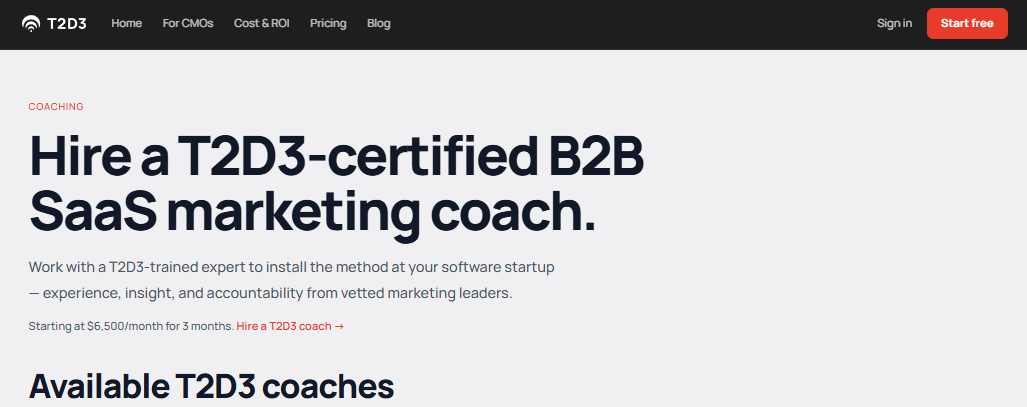
Best for: SaaS around $5M to $10M ARR with budget and no senior marketing leader, where the missing piece is direction rather than execution capacity.
Where it falls short: the entry price is a real hiring decision, the contract length is long by this category's standards, and if you already have a CMO, you are paying to duplicate them.
8. Cleverly
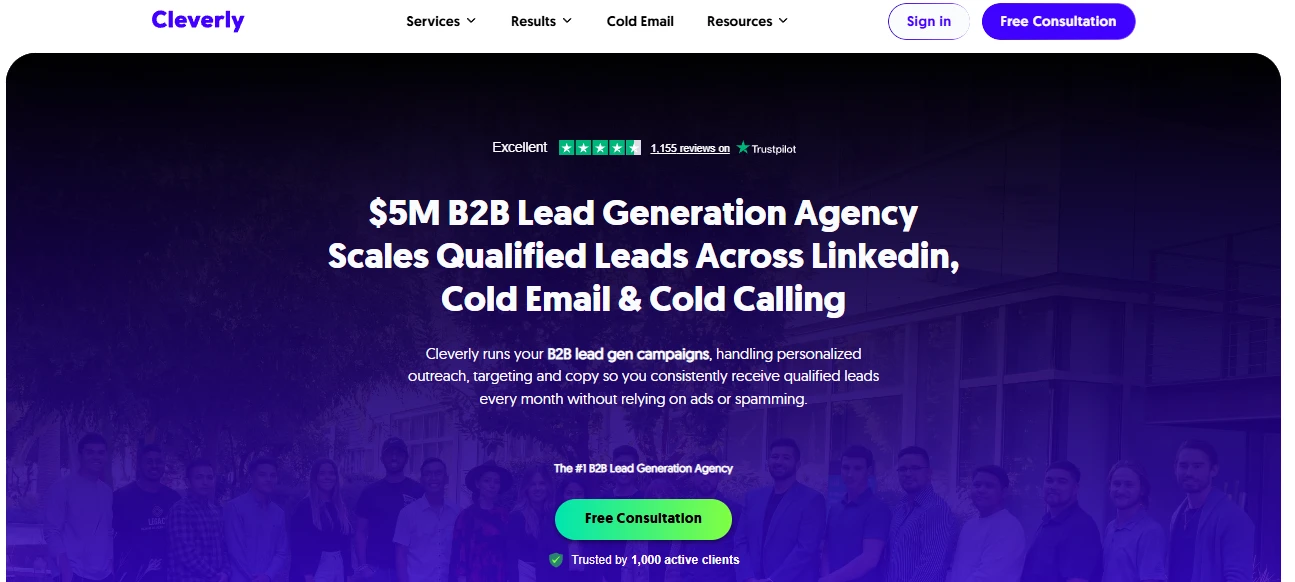
Cleverly is a productized LinkedIn outreach service out of Los Angeles. Connection requests, message sequences, A/B testing, and reply handling run off templates refined across a very large client base.
What earns Cleverly a spot here is how little it costs to try. Its three published plans run $397, $697, and $997 a month, about what one week of an SDR would cost you.
Best for: one- to three-person sales teams finding out whether LinkedIn works for their market before committing real money to it.
Where it falls short: template personalization reads as template personalization to a sophisticated buyer, Sales Navigator is your cost on top of the plan, and nothing is built that you keep.
What Good SaaS Lead Gen Looks Like: The Aircall Story
Aircall already had the tools. What they did not have was a view of their market that stayed true for longer than a week.
The build enriched 3,655 accounts into a self-refreshing picture of their whole market over six months, inside their own stack. The full Aircall case study shows the tables and the scoring rather than a single headline figure.
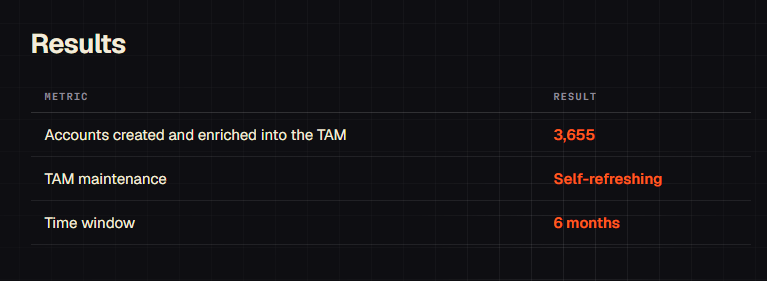
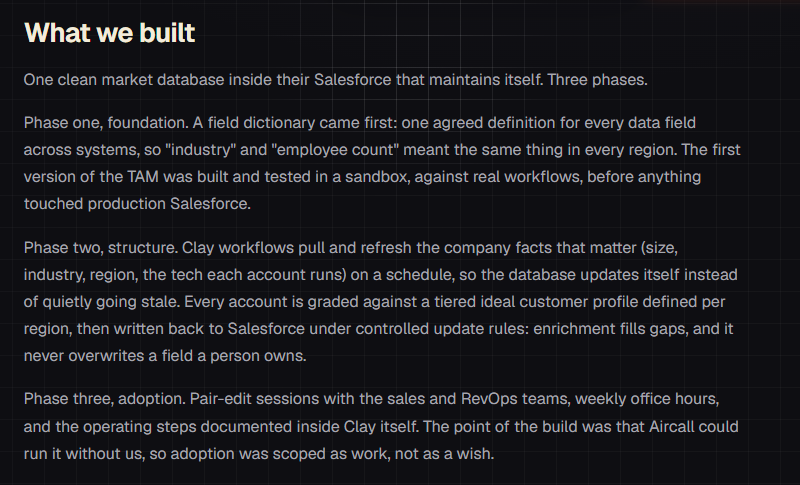
That is the difference between a list and a system. A list is accurate on the day it arrives. A system notices when a champion changes jobs and tells a rep about it the same week.
Here are four results with the metric spelled out, so you can tell which kind of number each agency is quoting you.
| Client | Result | What the metric counts |
|---|---|---|
| AirOps | $7.83M qualified pipeline and $1.52M closed-won over 10 months | Pipeline qualified by AirOps' own criteria inside their HubSpot, with no new SDRs hired |
| Aircall | 3,655 accounts enriched in 6 months | Accounts in a live, self-refreshing view of their market, not a one-time export |
| Hemlane | 830 qualified contacts at a 5.5% reply rate | Contacts that met the agreed qualification bar, from one campaign rather than a year of activity |
| Teikametrics | $360K annual contract value in the first 90 days | Signed contract value, alongside $300K+ pipeline over 9 months |
Pipeline, closed revenue, qualified contacts, and booked demos are not interchangeable. The gap between them is where most disappointing engagements live.
The Real Gap in 2026 Is Implementation, Not Tools
Every agency on this list buys from roughly the same handful of data providers. The enrichment is not the differentiator it was three years ago.
Alex Vacca describes it as the two speeds of AI adoption. Plenty of SaaS companies are AI-native in the deck and manual in the workflow, with a person copying between four tools to keep it moving.
You can see the same shift on the buying side. When Salesforce started giving up the interface, the value moved from the screen you log into toward the data underneath and the outcome that comes out.
That changes what you should be buying. Activity reports are the interface. Pipeline in your own CRM is the outcome, and the Clay agency breakdown covers who actually builds that layer.
Here is one practical test for a first call. Ask what happens between a funding announcement and the email going out.
If a person is in the middle of that chain, you are paying for their hours, not for a system. The Claude and Clay walkthrough in Frontal's review above shows what that chain looks like when it is built as a system.
It also costs less to manufacture warmth than most teams assume.
Five lead magnets produced 257 leads in our own funnel, and those people entered outbound already knowing who we were. The outbound list playbook covers how that list gets built, and the account-based marketing breakdown covers the ads layer that runs alongside it.
How to Choose the Best SaaS Lead Generation Company
Weak answers are easy to hear once you know what you are listening for. Ask these seven questions on the first call.
Who writes the messages, and can I see the ones that went out this week?
A strong answer names a person and shows you real sends. A weak one describes a process.
What signal triggers the first message?
If the answer is a job title and a company size, you are buying a list. Funding rounds, hiring patterns, champion job changes, pricing page visits, and stack changes give a message a reason to exist.
When does the first campaign send, and what happens if it slips?
Six weeks is the common answer. Ask what the commitment is worth when it is missed, because a date with no consequence attached is a forecast.
What will I see, and when?
Reply rate, positive reply rate, meetings held, and account health, visible to you rather than summarized monthly. Open rates and send volume are not results.
Whose account, and whose tools?
Work built inside your CRM and your Clay workspace stays yours. Work built inside the agency account leaves when they do, which is the most expensive thing to find out in month seven.
How many of your clients sell software at my ACV?
An enterprise-shaped process on a $3M ARR company moves too slowly to matter. An SMB-shaped one sends generic messages to enterprise buyers. Ask for two references you can call, not logos.
What are you wrong for?
An agency that cannot name a stage or a channel it is bad at has either not thought about it or is not telling you. Compare the answer against what they claim to cover later in the same call.
Everything You Need to Know About SaaS Lead Generation
| Question | Short answer |
|---|---|
| Top three overall | Frontal for an integrated system past product-market fit, Belkins for appointment setting at scale, CIENCE for volume with the data layer included |
| Who it is for | B2B SaaS past product-market fit with a focused account list and an ACV that supports a $5,000 to $12,000 monthly retainer |
| Common use cases | Replacing or extending an SDR function, opening a new ICP or region, running ABM ads against named accounts, turning founder content into outbound |
| What it costs | Most quality retainers sit between $5,000 and $12,000 a month. Enterprise programs reach $15,000 to $25,000. Cleverly is the exception at under $1,000 |
| Mistakes to avoid | Buying on promised meeting counts, signing twelve months with no review point, and letting the system get built inside the agency account |
FAQs About SaaS Lead Generation Agencies
Who are the best SaaS lead generation agencies in 2026?
Frontal, for SaaS past product-market fit that wants outbound, ads, and content run as one system by one team, built inside its own stack.
Belkins and CIENCE are the stronger answers for appointment-setting volume, Operatix for enterprise software in Europe, and Cleverly for a cheap first test of LinkedIn.
Is ColdIQ the same company as Frontal?
Yes. ColdIQ Agency became Frontal in 2026. Same operators, same client roster, same Clay partnership, new name. Case studies published under the ColdIQ name are the same team's work.
How much does SaaS lead generation cost?
Quality retainers cluster between $5,000 and $12,000 a month. Enterprise programs with several reps across regions run $15,000 to $25,000.
Pay-per-meeting pricing runs roughly $150 to $500 for SMB targets and $800 upward for enterprise, and it quietly rewards whoever books the loosest meetings.
What is the difference between a SaaS agency and a general B2B one?
A general B2B agency treats your buyer as a job title on a list. A SaaS-specific team knows that a champion leaving, a competitor renewal date, or a sudden hiring spike in your buyer's function changes what the first message should say.
How long before results show up?
Infrastructure and launch take about six weeks at most providers, and 30 days at the fastest. First replies land in the following two to four weeks.
A steady flow of qualified conversations is a month three conversation, not a month one conversation, whatever the pitch deck says.
Can an agency guarantee a number of meetings?
Some will. The reliable way to hit a guaranteed number is to send more messages to looser targets, and you are the one who inherits the burned list. A guarantee on delivery, meaning a date the first campaign is live, is a safer thing to hold anyone to.
Should we build this in-house instead?
Your team can absolutely run it. The real question is whether anyone has the hours to maintain it on top of the job they were hired for.
Plenty of teams build a good first version and never return to it. Name the person who owns the system before you decide either way.
Which SaaS lead generation companies are the best rated?
Belkins and Operatix carry the strongest third-party review records on this list, at 4.8 on Clutch and 4.6 on G2 respectively. CIENCE splits harder between platforms, which is why a pilot beats a star rating.
Ratings measure how an engagement felt, not what it produced. Ask for two references at your ACV and check what the number in their case study actually counts.
What is the best B2B lead generation service for mid-market SaaS?
Mid-market is where the integrated model pays back fastest, because the same 2,000 accounts need outbound, retargeting, and content pointed at them rather than three vendors working from three lists.
Frontal is built for that shape. If you only want appointment volume and already have a sales team ready to take the calls, Belkins or SalesRoads cost less and do less.
Which of these agencies do cold calling?
Belkins, CIENCE, Martal Group, and SalesRoads all run phone outreach. Frontal, Kalungi, and Cleverly do not. If calling is your proven channel, shortlist from the first group.
Grow Your SaaS Pipeline With Frontal
The fastest way to judge any of this is against your own pipeline rather than someone else's case study.
That means one GTM flywheel, with outbound triggered by live signals, account-based ads warming the same list, and content that turns engagers into conversations, all built inside your stack and yours to keep.
That is what produced $7.83M in qualified pipeline and $1.52M closed-won for AirOps over ten months, inside their own HubSpot, without a single new sales hire.
It is also what took Puzzle from a standing start to 77 leads a month, which their founder says on camera rather than in a testimonial box.
Brian Ragone, Puzzle's founder and CEO, describes how the program went from nothing to a steady 77 leads a month.
The first play goes live within 30 days, or the first month is free. We will not promise a meeting count, and we do not do cold calling.
Book a call, and we will tell you whether the signals in your market are thick enough to be worth it.